Performance Management in the Age of AI
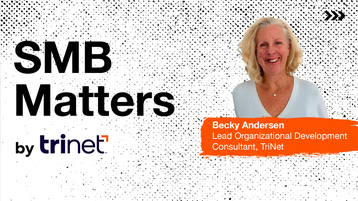
Welcome to SMB Matters, I am Becky Andersen, Lead Organizational Development Consultant at TriNet. This podcast takes a close look at the latest news and trends on a variety of topics related to running a successful small and medium-size business.
Today, we’re diving into a topic that’s generating a lot of attention in the workplace: AI in performance management—is it helpful or is it harmful?
As artificial intelligence becomes more integrated into HR systems, many organizations are turning to AI tools to streamline and enhance how they evaluate employee performance. But with that convenience comes a set of important questions about fairness, transparency and the human side of work.
We will be exploring the pros, cons and some practical tips for using AI in performance management responsibly.
As we are coming to find out, AI can process vast amounts of data quickly and consistently. Instead of relying solely on subjective manager feedback, AI tools can analyze metrics like project completion rates, customer satisfaction scores and peer feedback to provide a holistic view of performance. AI helps managers save time in drafting reviews leaving time for humanization and calibrating the data. It is not meant to replace human review or decision-making.
As an example: A sales organization uses AI to track call volume, conversion rates and client sentiment. The system flags top performers and identifies those needing support, which saves managers hours of manual review.
When done right, AI can help reduce human bias by standardizing evaluations and can ensure that all employees are assessed using the same criteria, minimizing favoritism or recency bias. According to PwC, bias in performance management has been reduced by up to 33% when AI tools are thoughtfully implemented.
As long as the data the AI tool is given is valid and complete, AI can be a powerful tool to offer continuous performance tracking, enabling real-time feedback to simplify or aggregate the data that will make the annual review process less complicated, allowing the manager to have the data at their fingertips.
According to Deloitte, companies using AI in performance management report a 71% increase in employee engagement and a 50% surge in goal achievement rates.
AI is only as unbiased as the data that is available to it. If historical performance data reflects systemic bias (e.g., gender or racial disparities), AI can preserve or even deepen those biases. When managers rely solely on AI when managing performance, the information given could lead to relying on information that is inaccurate, which leads to the loss of trust.
As an example: An AI tool trained on past promotion data might favor traits more common in one demographic group, unintentionally disadvantaging others.
AI can miss the “why” behind performance. It might flag an employee for low productivity without recognizing the humanism, they could have been covering for a sick teammate or dealing with personal challenges.
Employees may feel uneasy being evaluated by a “black box.” If they don’t understand how the AI works or how decisions are made, it can also affect trust and morale. If the AI data you are using is not reliable, it leads to missed opportunities and poor decisions being made.
Despite the benefits, trust remains a concern—only 45% of organizations currently use AI in HR, although 38% plan to adopt it soon. This is an indicator that more organizations are adopting AI technology in HRIS systems to keep up with technology.
I would like to go over some tips for using AI responsibly in performance management.
AI should support—not replace—human judgment. Managers should use AI insights as one input among many, combining data with empathy and context.
Regularly test your AI tools for bias. Work with vendors who are transparent about their algorithms, are committed to ethical AI practices and have AI compliance programs.
Be transparent about how AI is used in performance management. Explain what data is collected, how it is analyzed, how it informs decisions and whether it makes decisions on its own.
Ensure that employee data is handled securely and ethically. Only collect data that’s relevant to performance and comply with data protection laws.
Equip managers with the skills to understand and contextualize AI-generated feedback. Encourage them to have open conversations with employees about performance.
Carefully review the information that comes from the technology before using, to recognize signs of bias or data that may not be accurate.
Final thoughts: Using AI in performance management does not mean it’s either helpful or harmful—it depends on how it’s used. When implemented thoughtfully, AI can enhance fairness, efficiency and insight. But without careful oversight, it risks reinforcing bias and undermining trust. AI is not meant to eliminate the humanization that comes with managing an employees’ performance. It is meant to assist in data gathering.
With AI-based evaluations leadership potential is predicted with up to 80% accuracy and also reduces HR workload by as much as 50%. The potential is clear—but so is your responsibility. As HR professionals, our role is to ensure that technology serves humans—not the other way around.
Thanks for listening to SMB Matters. If you enjoyed this show, please leave a review wherever you listen to your podcasts. And please share it with a colleague or make sure to subscribe to our newsletter at TriNet.com/insights. SMB Matters by TriNet is committed to providing small and medium sized businesses with timely and relevant insights.
Disclaimer: This podcast is for educational purposes only. With decades of experience supporting small and medium-size businesses, TriNet has unique insight into HR best practices for businesses. TriNet does not provide legal, tax or accounting advice. The materials in this podcast and the options and opinions expressed herein may not apply to your company or scenario, so you should consult with your own advisors on how best to proceed. Reproduction in part or in whole is not permitted without express written authorization from TriNet.


