Three Myths of the R&D Tax Credit
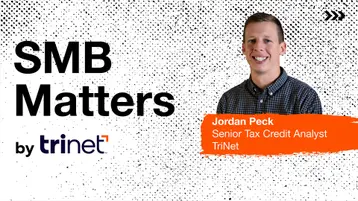
Welcome to SMB Matters. I’m Jordan Peck, CPA and Senior Tax Credit Analyst at TriNet Clarus R+D, where I help companies of all sizes get rewarded for their innovative work.
This podcast series takes a close look at the latest news and trends on a variety of topics related to running a successful small and medium-sized business.
As one of the country’s largest tax incentives, the federal research and development tax credit was created and designed to encourage innovation and allow companies to receive money back for work that they’re already doing. Although many SMBs are eligible for the federal R&D tax credit, they fail to claim it due to a lack of awareness, or due to common misconceptions. Today, I’ll discuss the top three myths that might be holding you back from claiming federal R&D tax credits, which could help you reinvest into your business.
Myth #1: My business doesn’t qualify.
Startups and SMBs that aren’t in scientific or technical industries may assume they don’t qualify for the federal R&D tax credit. Many businesses also perform activities that qualify without even realizing it. The federal R&D tax credit can be claimed by companies of any size in a wide range of industries, including cosmetics, food and beverage, apparel, telecommunications, software development, and more. Chances are, if your company is doing anything technology-based, improving it, and selling it to customers, you may likely qualify.
Myth #2: The savings aren’t worth it.
In 2020, according to Tax Foundation, $11.8 billion was claimed in federal R&D tax credits. Remember, this is a tax credit, not a deduction. The federal R&D tax credit was originally signed into law in 1981 and expanded in 2015 with the Protecting Americans from Tax Hikes Act (or the PATH Act), enabling early-stage companies to use the tax credit against certain payroll tax liabilities. The PATH Act allowed newer, smaller companies to take advantage of a tax credit that was previously inaccessible to them. Regardless of which industry your business fits within, it’s worth looking into and should be an ongoing part of your annual tax strategy.
Myth #3: It’s too complicated to claim.
Many companies feel overwhelmed and don’t know where to start. Working with a trusted, experienced provider is key, especially one who utilizes a technology-driven solution, allowing you to organize your documentation all in one place. A robust R&D platform also helps with the easy generation of a complete, compliant R&D study where all your qualifying activities are clearly documented. In the event of an IRS audit, it is important to have access to thorough documentation that clearly substantiates your claim. Having a trusted provider in your corner makes all the difference, so that you can confidently claim the credits you’ve earned.
Taking advantage of the federal R&D tax credit doesn’t have to be confusing or complicated and can go along way when it comes to optimizing your company’s innovation and growth.
Thanks for listening to SMB Matters. If you enjoyed this show, please leave a review on Apple Podcasts, Spotify or wherever you listen to your podcasts. And please share it with a colleague or make sure to subscribe to our newsletter at TriNet.com/Insights. Also, we’d love to hear from you, so please feel free to drop us a line at SMBMatters@TriNet.com. SMB Matters by TriNet is committed to providing small and medium-size businesses with timely and relevant insights.
Legal Disclaimer:
This podcast is for educational purposes only. With decades of experience supporting small and medium-size businesses, TriNet has unique insight into HR best practices for businesses. TriNet does not provide legal, tax or accounting advice. The materials in this podcast and the options and opinions expressed herein may not apply to your company or scenario, so you should consult with your own advisors on how best to proceed. Reproduction in part or in whole is not permitted without express written authorization from TriNet.


