Navigating Political Discussions in the Workplace
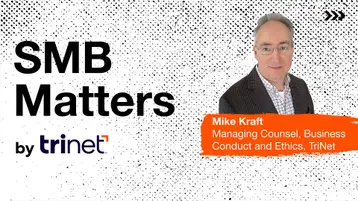
Welcome to SMB Matters. I’m Mike Kraft, Managing Counsel, Business Conduct and Ethics at TriNet. This podcast series takes a close look at the latest news and trends on a variety of topics related to running a successful small or medium-sized business.
It’s a Presidential election year and the campaign season is already upon us. Do you have employees who are politically active or outspoken? Are political discussions distracting you from your core mission, or negatively impacting employee engagement?
Politics can evoke strong emotions and those seemingly unavoidable political discussions in the workplace can become problematic by creating tension among employees, undermining the workplace culture, creating interruptions in productivity, lowering morale, and even resulting in complaints of discrimination or harassment.
But, it’s not enough for employers to simply hope that employees will think before speaking or avoid talking about politics to prevent negatively impacting relationships with co-workers or the workplace culture at large. Employers need to set an example from the top and ensure that management and employees are given guidance for how to steer conversations away from politics or how to respectfully disengage when conversations become heated or uncomfortable. Some simple, but effective suggestions that you can share with your employees include:
- Being self-aware- meaning they should act and communicate professionally and from a place of inclusion and respect, and keep a close tab on their own emotions and feelings;
- Carefully considering the potential impact of what they plan to say in addition to their intention. Remember: If what you plan to say could be considered unprofessional, unwelcome, or offensive to a co-worker or customer, don’t say it.
- Making sure their social media activity aligns with any company policies. It is always a best practice to be respectful, fair, and courteous in one’s online interactions and to avoid egregious conduct.
Should an employee find themselves in an uncomfortable or unwelcome discussion, encourage them to:
A. Politely disengage from the conversation;
B. Address the comments in a respectful manner. Everyone’s opinions are to be respected and doing so is the only way to build a feeling of safety and trust among coworkers;
C. Respectfully shift the conversation to a different topic;
D. If they feel the discussion is becoming heated or turning ugly, make sure they know they can talk to a manager or Human Resources immediately—You do not want discussions to turn into arguments or worse.
Make sure you've taken the steps to ensure that employees know how and to whom they can raise a concern about unprofessionalism or harassment in the workplace.
In addition to providing tools to disengage, employers need be proactive and address potential discussions with written policies that tie into the principles of the company’s culture and values.
While it is not uncommon for employees to question whether such restrictions inhibit their right to free speech, it is a common misconception that employers cannot address political speech in the workplace because of the First Amendment. Freedom of speech is actually the prohibition against the government curtailing speech, not private companies or individuals. This means that more flexibility is afforded to private sector employers to impose reasonable restrictions on political discussions in the workplace.
So, assuming you've got the right policies in place, and you've properly calibrated them to avoid any overreaching, the next consideration is educating your employees about how their political discussions can implicate those policies. Employers should ensure that employees:
- receive clear communication of the company’s expectations to act with professionalism and respect.
- understand that their political speech can be restricted at work.
- are educated on what is considered discrimination and harassment under their company policy and the law.
- acknowledge those policies which set boundaries related to social media and statements on behalf of the company, standards of professionalism, and prohibitions on discrimination and harassment.
- know how and where to report violations of company policies, such as a Helpline or their Human Resources Business Partner.
- understand that concerns of unprofessionalism, discrimination, or harassment related to political speech in the workplace will be promptly addressed.
- carefully consider whether their political speech may be perceived as unprofessional or unwelcome and offensive (e.g., discriminatory or harassing) to others by implicating protected categories.
- have access to Employee Assistance Program (EAP) information. It is also likely that your EAP provider will be able to provide tips for how and when employees might discuss politics and information about managing the stress some experience in an election year.
Politics will always create emotional reactions, but by implementing policies such as these and educating your workforce on workplace expectations for professionalism and respect, employers have a greater likelihood that this political season will not negatively impact their workplace.
Thanks for listening to SMB Matters. If you enjoyed the show, please leave a review on Apple Podcasts, Spotify or wherever you listen to your podcasts. And please share it with a colleague or make sure to subscribe to our newsletter at TriNet.com/Insights.
Also, we’d love to hear from you, so please feel free to drop us a line at SMBMatters@TriNet.com. SMB Matters by TriNet is committed to providing small and medium-size businesses with timely and relevant insights.
Legal Disclaimer:
This podcast is for educational purposes only. With decades of experience supporting small and medium-size businesses, TriNet has unique insight into HR best practices for businesses. TriNet does not provide legal, tax or accounting advice. The materials in this podcast and the options and opinions expressed herein may not apply to your company or scenario, so you should consult with your own advisors on how best to proceed. Reproduction in part or in whole is not permitted without express written authorization from TriNet.


