Small Steps, Big Impact: Driving Down Costs Through Informed Healthcare Decisions
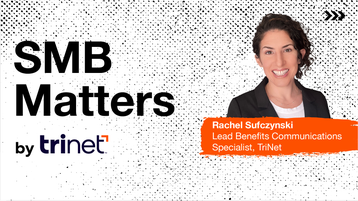
Welcome to SMB Matters. I’m Rachel Sufczynski, Lead Benefits Communications Specialist for TriNet. This podcast series takes a close look at the latest news and trends on a variety of topics related to running a successful small and medium sized business.
Healthcare costs are on the rise, and you and your employees may be feeling the impact. While many cost drivers are out of your control, you are not powerless. Today, we’ll talk about how you can harness the power of benefits education to drive healthcare behavior change which may help lower healthcare costs and even improve health.
Behavior change can be hard! Consider something you’ve wanted to change, like adding in regular exercise. You join a gym, you get new gear… but after a few times, you stop going. We know exercise is generally good for us, but that doesn’t always translate into us actually exercising. The same can be true with changing the way we choose and use healthcare. Knowing may not be enough.
When it comes to any behavior change there are barriers, there are things that get in the way. A major barrier to healthcare behavior change is that navigating healthcare can be confusing, it can be overwhelming… and at times it can feel like an entirely different language. Adding insult to sometimes literal injury, we’re often making healthcare choices when we’re already drained. When mental, physical or emotional resources are low, we may tend to take the path of least resistance, choosing what seems easiest at the time, even if that choice may not be the most cost effective or practical.
Benefits education can help overcome some of these barriers, but first we have to try and make benefits as a whole digestible for our employees. First thing on the agenda: help employees understand the ABCs of benefits. Do your employees know what a deductible is, or how to find in-network care, or even understand plan types? Without this basic knowledge, how can employees possibly choose or use their plans wisely?
Once the basics are covered, you can begin to tackle driving behavior change. Let’s look at a really common scenario. Your employee Ted he thinks he has a sinus infection and wants to be seen by a doctor. He remembers there’s an emergency room right down the street, so he goes. Four hours later, Ted sees a doctor and gets a prescription, and he cannot believe he has to pay $200 out of pocket for that visit! As if that weren’t enough, what Ted doesn’t realize is that by going to the ER for this non-emergency issue, it might also impact his company’s future healthcare costs, potentially raising what Ted and his company pay per paycheck for their healthcare next year.
Here's how benefits education may have helped. So, what if you had sent a simple message letting all your employees know about their in-network care options like urgent care and telemedicine. Maybe even sending out a scannable QR code to their medical carrier mobile app so they’re ready to grab quick care information when they need it. To further drive action, maybe you even offered anyone who downloaded that app a reward.
Ted decides to participate and gets the app. When he wakes up that day and doesn’t feel well, he remembers that he already has the app on his phone and can easily find in-network telemedicine. He’s quickly connected remotely to a doctor, gets a prescription, and only has to pay $20 out of pocket, all from the comfort of his couch and his pajamas. As a bonus, long term, these types of behavior changes may positively impact your company’s benefit renewal rate, making it a win-win.
A few additional tips for starting an education program. This should be a year-round conversation. Once you’ve covered your benefits basics and encouraged your employees to download their medical carrier mobile app, consider highlighting one topic each month where employee choice may have significant cost impact. Things like in-network care options, preventive care and mental health. Don’t forget to also highlight things that are already available in your healthcare plan like discount programs, wellness information or virtual talk therapy, which may indirectly impact cost and highlight the value add of your total benefits package.
Keep your messaging short, simple and to the point. Focus on one thing at a time. And don’t forget, how you communicate with your employees matters. While email is readily available, it’s not always the most effective. Get creative! Consider your company intranet or other company communication tools, like meetings, whether they’re All-Hands or smaller group, break room materials or short, virtual presentations. Don’t be afraid to use more than one.
Brand your education program as something FOR your employees. Consider naming the initiative and maybe even offering incentives like rewards or recognition to help motivate and increase engagement. Always make sure that the incentive programs align with your company goals and policies. Not only does benefits education have the potential to lower costs and enhance health, but this type of initiative may help your employees feel seen and heard, which is a value add that cannot be quantified.
One last note: behavior change is hard, and it takes time, especially when it comes to healthcare. Check in regularly and see if you’re accomplishing the goals, you set out to tackle. You might even ask your employees for feedback. Start small, you’ve got this!
Thanks for listening to SMB Matters. If you enjoyed this show, please leave a review on Apple Podcasts, Spotify, or wherever you listen to podcasts. And please share it with a colleague or make sure to subscribe to our newsletter at TriNet.com/insights. Also, we’d love to hear from you so please feel free to drop us a line at smbmatters@trinet.com. SMB Matters by TriNet is committed to providing small and medium sized businesses with timely and relevant insights.
Legal Disclaimer: This podcast is for educational purposes only. With decades of experience supporting small and medium-size businesses, TriNet has unique insight into HR best practices for businesses. TriNet does not provide legal, tax or accounting advice. The materials in this podcast and the options and opinions expressed herein may not apply to your company or scenario, so you should consult with your own advisors on how best to proceed. Reproduction in part or in whole is not permitted without express written authorization from TriNet.


