Regulations, Tariffs & Taxes: Key Policy Changes Impacting SMBs
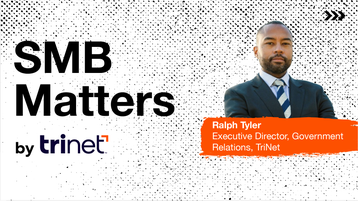
Welcome to the TriNet SMB Matters podcast, I am Ralph Tyler, Executive Director of Government Relations with TriNet. Today, we will break down the recent policy changes in Washington, DC that are shaping the small and medium sized business economy.
With the new administration and Congress in place, several key developments are unfolding that SMBs should watch closely. We’ll cover what’s happened, what’s next and why SMBs should be paying attention.
The Trump Administration has launched a wave of policy actions, through executive orders and agency directives, that are having a major impact on businesses, small and large, the stock market, supply chains, NGOs, nonprofits and individuals. With Republicans now controlling the White House and both chambers of Congress, this unified government has a unique window of opportunity to advance a host of legislative and regulatory priorities. Let’s take a closer look into what some of those priorities look like.
Regulations
One of the most significant shifts has been an effort to roll back federal regulations. President Trump signed an executive order requiring for every new regulation proposed, two must be eliminated. The goal? To reduce what’s seen as unnecessary red tape for businesses.
The Department of Labor, and other agencies have begun reevaluating rules affecting everything from overtime pay, which raises the salary threshold for overtime eligibility, to rolling back Small Business Administration rules to streamline capital access. This change could significantly impact SMBs.
Tariffs
On April 2, the Administration announced a “reciprocal” tariff plan, establishing a 10% baseline tax on imports from all countries, with higher rates targeting nations with trade surpluses with the U.S. This significant escalation in protectionist trade policy has introduced uncertainty for American investors and businesses.
A 90-day pause was announced on April 9 for most countries, excluding China (except for smartphones and electronics), to allow time for negotiations. While country-specific trade deals are anticipated, the 10% base tariff is expected to remain in place after the pause.
Higher tariffs are likely to raise costs for American consumers and SMBs. However, the Administration argues that successful negotiations could reduce tariffs on U.S. exports and foreign imports, enhancing supply chains and global demand for U.S. goods. In the meantime, companies should assess their exposure and consider long-term supply chain restructuring to manage risks and find new opportunities.
Tax Reform
Congress and the Administration are advancing legislation to extend the 2017 Tax Cuts and Jobs Act, aiming to provide long-term tax certainty as part of the Administration’s pro-growth agenda. Included are provisions exempting tipped income and overtime pay, which could ease compliance and payroll costs for SMBs in the service industries.
The House tax bill has moved through the committee and will be considered for a vote on the floor in the coming weeks. While debates continue over spending cuts and targeted increases, the Administration is hoping for Congress to finalize a package and sign it into law before the August recess.
For SMBs, key benefits could include:
• Enhancement of tax incentives for research and development.
• Reauthorization of the Section 199A Deduction, which reduces taxable income for pass-through entities.
• Extension of bonus depreciation, which enables immediate deduction of equipment costs.
• Maintenance of lower tax brackets, which should benefit small business owners.
Department of Government Efficiency (DOGE)
The Department of Government Efficiency, also known as DOGE, was created by an executive order on day one of the Administration, to reduce federal spending categorized as “waste, fraud, and abuse.” The agency is focused on downsizing government and driving efficiencies through technology.
IRS and ERTC
On February 19, the IRS announced the termination of 6,700 probationary employees, including 3,500 from the Small Business/Self-Employed division. Thousands more have reportedly accepted a resignation offer. These firings, which have been challenged in court, may delay small business tax processing. A federal hiring freeze compounds the issue, limiting the IRS’s ability to manage challenges like the Employee Retention Tax Credit (ERTC) backlog.
TriNet has been actively advocating for policies to expedite processing of customers ERTCs and to modernize IRS processing. Thanks to our efforts, Congress sent a letter to the IRS directing them to expedite ERTC claims for our customers, helping many SMBS receive their funds.
Additionally, TriNet successfully lobbied for the modernization of key tax forms to an electronic system to enhance the processing speeds and help SMBs get access to funds.
NLRB
The National Labor Relations Board (NLRB), which operates independently, has undergone leadership changes. President Trump dismissed General Counsel Jennifer Abruzzo and Democratic member Gwynne Wilcox earlier this year. Acting General Counsel William Cowen has since rescinded 31 of Abruzzo’s enforcement memos, including those concerning non-compete clauses and expanded definitions of protected activity.
While only two of five Board seats are filled, regional offices continue processing unfair labor practice charges. Once a permanent General Counsel is in place, we may see a narrower interpretation of employee status, confirmation of gig workers as independent contractors, and broader employer authority.
EEOC
The Trump Administration’s executive order on “Ending Illegal Discrimination and Restoring Merit-Based Opportunity” directs federal agencies to enforce civil rights laws against private-sector DEI policies that involve employment decisions based on protected characteristics like race or sex. President Trump has dismissed two Democratic EEOC commissioners, one of whom is seeking reinstatement. With no quorum, the EEOC is currently unable to make significant policy decisions or enforce civil rights protections.
That said, acting Chair Andrea Lucas has since taken steps to limit DEI initiatives and reduce protections for transgender workers in line with the Administration’s stance on gender ideology. Bottom line for SMBs? You may see further efforts at EEOC to limit DEI practices, even seeking to redefine definitions of discrimination. SMBs can still promote diversity but should review DEI programs to ensure they comply with Title VII and are inclusive, non-discriminatory, and open to all employees.
Nonprofits
Many nonprofits are experiencing paused or canceled federal grants, creating financial strain. The Urban Institute estimates 60–80% of government-funded nonprofits may struggle to cover expenses if this continues. Organizations providing housing assistance, education, healthcare, and environmental services are among the hardest hit, especially in states like Alaska, Louisiana, West Virginia, Delaware, and Mississippi. There are also ongoing discussions about revoking the tax-exempt status of some 501(c)(3)s.
Healthcare Transparency
On February 25, the President signed an executive order on healthcare price transparency. It strengthens enforcement of existing rules and requires hospitals and insurers to disclose actual—not estimated—prices. The Departments of Treasury, Labor, and Health and Human Services (HHS) have been directed to implement and enforce these new regulations quickly. The goal is to enable patients to compare prices and shop for care more efficiently.
Thanks for listening to SMB Matters. If you enjoyed this show, please leave a review wherever you listen to your podcasts. And share it with a colleague or make sure to subscribe to our newsletter at TriNet.com/insights. Also, we’d love to hear from you, so feel free to drop us a line at smbmatters@trinet.com. Until next time, take care and stay engaged!
Legal Disclaimer: This podcast is for educational purposes only. With decades of experience supporting small and medium-size businesses, TriNet has unique insight into HR best practices for businesses. TriNet does not provide legal, tax or accounting advice. The materials in this podcast and the options and opinions expressed herein may not apply to your company or scenario, so you should consult with your own advisors on how best to proceed. Reproduction in part or in whole is not permitted without express written authorization from TriNet.


