Tax and Tariff Mid-Year Update: What SMBs Need to Know
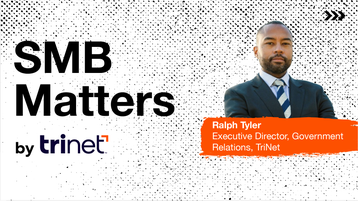
Welcome to SMB Matters. I’m Ralph Tyler, Executive Director of Government Relations with TriNet. Today, we’ll be breaking down recent policy changes in Washington, DC that are shaping the small and medium-sized business economy.
Congress and the Administration have been busy in the first half of the year, working through policy and personnel changes that could have a major impact on SMBs. Let’s start with the biggest legislative development so far: H.R. 1—“The One Big Beautiful Bill.”
Signed into law on July 4th, H.R. 1 includes several congressional priorities, many of which could directly affect small businesses and their payroll tax obligations.
First, the Tip Tax Deduction. For tax years 2025 through 2028, individuals may be able to deduct qualified tips from their taxable income. Tips are generally considered to qualify when they are cash tips earned in occupations where tipping is customary. The IRS will publish a list of tipped occupations eligible for the deduction on the coming weeks and months. These are generally paid voluntarily and determined by the payer—not the employer. A list of excluded occupations is expected from the Treasury Department. The deduction is capped at $25,000 and phases out for incomes over $150,000 for individuals and $300,000 for joint filers.
The bill also expands the FICA tip credit to include beauty services including hair and nail salons, esthetics, and spas. Employers in these industries may now claim the credit for the employer-paid portion of Social Security and Medicare taxes on tipped income, previously limited to food and beverage industries.
Next, the Overtime Tax Deduction. Starting in 2025, employees can deduct up to $12,500 in qualified overtime pay, and joint filers can deduct up to $25,000. The deduction phases out at the same income thresholds as the tip deduction. The overtime deduction only applies to the premium portion of the overtime pay, meaning the amount above the regular hourly rate. The IRS is expected to release guidance soon, and TriNet will continue to share updates to help you navigate this.
H.R. 1 also includes provisions to support innovation and investment. First, the bill allows for businesses to immediately deduct domestic research expenses starting in 2025, reversing the 2017 Tax Cuts Jobs Act change that required amortization over five years. TriNet has long advocated for this change recognizing its potential to enhance capital access for innovative SMBs.
Second, bonus depreciation is back. Businesses may be able to immediately deduct the full cost of qualified property—such as equipment, software, and building improvements—placed in service after January 19, 2025. Transitional elections may also allow 40% or 60% bonus depreciation for certain property in the first taxable year after that date.
Third, the Section 199A deduction for pass-through entities is now permanent and expanded. The 20% deduction for qualified business income will continue beyond 2025 and with adjustments that may offer additional benefits to S-Corps and other pass-throughs.
H.R. 1 also includes a provision to terminate some ERTC payments. Under this bill the IRS is prohibited from allowing or refunding any ERTC claim for Q3 or Q4 of 2021 unless the claim was filed by January 31, 2024. This affects only claims that remain unprocessed and unpaid as of the bill’s enactment.
On April 2nd, the Trump Administration proposed a “reciprocal” tariff plan: a 10% baseline tariff on all imports, with higher rates for countries running trade surpluses with the U.S. A 90-day pause was announced on April 9th to allow for negotiations, resulting in new trade deals with the UK and Vietnam.
The tariff freeze was extended to August 1st, but by late July, the Administration escalated its trade agenda, imposing 25–40% tariffs on imports from 14 countries, including Japan and South Korea. Just before the August 1 deadline, new tariffs were announced for dozens more nations, with Mexico receiving a 90-day extension.
On August 7th, tariffs on over 90 countries took effect, ranging from 15% to 50%. On August 11th, the president signed an executive order delaying tariffs on Chinese imports for an additional 90 days. These measures may contribute to increased costs for some U.S. consumers and businesses. The Administration argues that successful negotiations could eventually lower tariffs and boost demand for U.S. goods. In the meantime, impacted companies may want to assess their exposure, review their current operations, and stay informed as the global trade landscape evolves.
On the government personnel front, on July 7th, the Senate HELP Committee advanced several of President Trump’s nominees for key labor and employment roles. These include Daniel Aronowitz for the Employee Benefits Security Administration or EBSA, Andrew Rogers for the Wage and Hour Division, David Keeling for OSHA.
Once confirmed, these individuals will be responsible for carrying out the Administration’s deregulation and pro-business agenda. We expect a shift in focus from enforcement to compliance assistance, which could have meaningful implications for SMBs navigating federal labor and employment regulations.
On August 1st, Andrea Lucas was confirmed by the Senate to Chair of the EEOC and has indicated that the EEOC will deprioritize enforcement of protections for LGBTQ populations and redefine workplace civil rights enforcement through a conservative lens.
You’ll likely see significant changes in the coming months. Clients can stay tuned to TriNet’s communications and resources for updates and best practice guidance.
Looking ahead, with H.R. 1 now signed into law, the Administration is expected to focus on implementing its provisions and potentially continuing its focus on a deregulation agenda. Congress may turn to other priorities like government funding recissions, sanctions, health care, family leave, and retirement policy. Leadership is already floating the idea of a second or third reconciliation package this fall. If H.R. 1 is any indication, SMBs should be prepared for swift legislative movement.
As always, TriNet is here to help you stay on top of regulatory changes. We’ll continue to share helpful insights and best practices as policy developments continue to evolve. Be sure to subscribe to the SMB Matters podcast and follow us for updates. Also, we’d love to hear from you so please feel free to drop us a line at smbmatters@trinet.com. Until next time, take care and stay engaged!
Legal Disclaimer: This podcast is for educational purposes only. With decades of experience supporting small and medium-size businesses, TriNet has unique insight into HR best practices for businesses. TriNet does not provide legal, tax or accounting advice. The materials in this podcast and the options and opinions expressed herein may not apply to your company or scenario, so you should consult with your own advisors on how best to proceed. Reproduction in part or in whole is not permitted without express written authorization from TriNet.


