
A Discussion with Cordoba Music Group

Episode 3
 | 
Published: April 21, 2021
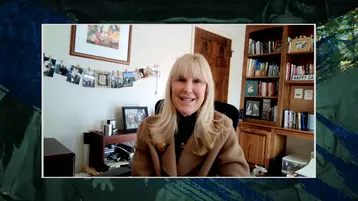
Hear CEO, Tim Miklaucic, discuss how he turned his hobby of importing classical guitars into a successful business and how he managed to keep his worldwide operation thriving during the pandemic.

Burton Goldfield: So I'm absolutely pleased to welcome Tim Miklaucic. Tim is the CEO and owner of Cordoba Music Group, and it's gonna be a fantastic time talking to him. Cordoba manufactures and distributes acoustic and electric guitars, ukuleles, and accessories for musical instruments. Now there’s a quote that I found that Beethoven said that music can change the world. And that's very interesting because I'm a huge music fan, and I believe that entrepreneurs can also change the world. In Tim, we have both. And I'm excited to talk to Tim and fascinated by his journey. Tim, welcome. I appreciate you taking time with us today. For the entire TriNet team, we're thrilled to have you.

Tim Miklaucic: Thanks very much for having me, Burton. I'm glad to be here.

Burton: So how did you go from being a PhD candidate in philosophy to founding one of the world's most recognized guitar companies?

Tim: Well, as you imagine, that’s a long story. That's a circuitous route, kinda typical of my life. I was a musician since a very early age. I was a guitarist since I was eight or nine. And I was a frequent visitor of Europe, and spent some time in Spain as a kid and fell in love with Spanish guitar. So that's kind of the foundation of my musical interests. I learned classical guitar through high school, and I became... Very early, even before college, I was importing Spanish guitars from Spain to the United States. And I was doing it kind of as a hobby, bringing guitars back from Europe, selling them to a teacher, to a friend in the United States.

So that's the very early period. When I went to college, I decided to study medicine. So I did an undergraduate degree, a pre-med degree. And during the course of that education, I switched to chemistry and philosophy. So I moved away from planning to be a doctor, to just studying what I was interested in. And at that time it was chemistry and philosophy.

And when I graduated, it was in a period of deep recession in the early '80s, so I spent a year teaching as a tutor. And later decided that I would go to graduate school and study philosophy to be a teacher, to be a professor. In a little bit, one year or two years into that program, I found that my hobby of trading guitars had become a bigger and bigger part of my life, a very fun pastime.

It involved traveling all over the world, finding guitars in Europe and South America, and even sometimes delivering them to Asia, to Japan, in those years. And I love the business of traveling and trading guitars. And I learned to be, at that time, an expert in the classical guitar. So I dropped out of graduate school and started a business called Guitar Salon, which still exists today. And that business is a business of importing classical guitars from all over the world and selling them retail in Los Angeles.

And when the internet came, it became a retail business, selling guitars all over the world. And from that small business, that retail shop, we became a leader in that area, and began distributing guitars in the United States, and eventually manufacturing guitars under our own brand name, Cordoba. So that's kind of the genesis of the business.

Burton: So how did you select the original guitars that you brought in? Was it based on your relationships with the makers of those guitars or did you have a particular expertise that you could find a unique guitar that then could be resold in another country? Or what were those relationships like?

Tim: That's a good question. Since I was in my teens, I was visiting guitar shops in Madrid in particular. And so as a kid and as a player, I would go to the guitar shops of these famous makers that were all centrally located in Madrid. And I would play their guitars, I would try them out. I didn't have the money to buy them, but I had the time to visit and play, and get to know the makers.

So, I did have several relationships in Madrid. But one summer, while I was living in Paris with my uncle, I met a guitar maker at a guitar shop in Paris from Granada, Spain. And it was spectacular and very different than any guitar I knew. So I flew to Granada, Spain to meet that maker in his workshop. And then over a period of time he introduced me to a group of makers in Southern Spain. So now I had two regions where I knew the makers. And I spent months traveling around Spain in those early days, in the early '80s getting to know all the makers that I thought were, you know, of note, of value to me. And I had a special interest in guitars from the early 20th century rather than the mid to late 20th century.

The Spanish guitar makers changed their approach from these very intimate, beautiful, warm and woody guitars to more piano-like instruments. And I preferred the early guitars. So I began asking these makers if they could make guitars more like the early 20th century rather than the guitars they were making in the late 20th century. And they complied. And later on I found more makers around the world, particularly in Europe, but also in South America and even Japan in those days.

And people were happy to make guitars to my taste. So in a way, I was both a market maker for those makers in my retail shop, and I was a kind of influencer. I had a certain style that I liked that I thought that they should pursue, and the makers were interested and willing.

So I became kind of part of the, both the importing and marketing of the instruments process as well as the design.

Burton: So they appreciated that you truly loved the instruments that they were making and they were willing to work with you to produce those instruments, which were probably not their mainstream instruments at that point in time?

Tim: They were not the most popular at the time, but I thought that they were most interesting and the most beautiful. And so I was sort of always pushing for my vision of beauty in a guitar. And you're right, they were very, very interested and willing to work with somebody who both loved and knew the guitar. And at the time I was a pretty good player, so I could also demonstrate, and I could share my love for the instrument and how I hoped the instrument would sound.

So the ability to demonstrate and play made me kind of unique as a dealer, let's call it.

Burton: And tell me about the other side of the equation for a minute. How did you find the customers for these unique instruments and how did that scale over time?

Tim: Well, you're gonna laugh at how it began. I started by placing classified ads in newspapers in four or five major cities in the United States. If you can remember classified ads.

Burton: Of course.

Tim: People looked for anything used, or anything rare, or anything interesting appeared in classified ads. And so I placed ads in the Boston Globe, and the New York Times, and the Dallas Post, the L.A. Times, San Francisco Chronicle. And I would put a very small ad talking about the guitar that I had, the year that it was, maybe a small description.

And I placed those ads in those various cities, along with paying for, if you can remember this, a listing in a phone book. Since I wasn't in that city, I had to pay to be in the Boston Directory. So I was doing whatever I could. This was also a time before UPS was shipping things everywhere on demand. And also before the time you could take a credit card over the phone. I would say there were some challenges.

So it happened by snail mail. I mailed people photographs of guitars that they were interested in hearing about. I had photographs printed in 24-hour photo printing shops. I took photos on demand. It was a pretty interesting time. They had to send me a check, I would send them the guitar. So the timeframes were very long, but my goal was to make it as fast as possible.

And to allow somebody to call from Boston or Chicago, talk to me, and receive photographs a day or two later that I had taken and processed and developed, along with a letter kind of explaining what I had to offer and why I thought this guitar would be of interest to them based on their requests.

Burton: Well, it's amazing because you took your true passion and your unique perspective to influence both sides of the equation. So if I fast forward to today, and I look at brands like the Guild brand, which is part of your organization, and as somebody who loves music, I know that Buddy Guy and Eric Clapton have played Guild guitars over time. How did that come about and become part of your organization today?

Tim: Well, in 1997, I formed Cordoba Music Group, Cordoba Guitars originally, and we became a manufacturer of nylon-string guitars, Spanish guitars. And we grew that into the largest, one of the largest nylon-string guitar brands in the world.

So, it became very well-known in that category. And it so happens that I was friends with the CEO of Fender Guitar at the time, a guy named Scott Gilbertson. And one day following a... Maybe at a trade show in Frankfurt, Germany, he hit me up with, "Would you be interested in buying Guild Guitars?” And I was kind of shocked.

And as an entrepreneur, I've always built my own brand, my own... I never thought of acquisition, but it was such a unique opportunity really to buy a brand that was a beloved brand to me as a kid. And as you say, I knew dozens of artists that played Guild guitars, and they were on television, they opened Woodstock, these were things that I was familiar with.

And so I was a little taken aback, but I flew home, thought about it, talked to my wife, talked to my colleagues at the company, and there was such enthusiasm that we decided to proceed. So, we had a very short window, about 45 days to close the deal. I'm glad to say my bank was incredibly supportive and helped me close that deal.

And so 45 days later we bought Guild Guitar, this was July, roughly July 4th or 5th, 2014. And we bought it with all the equipment that was located in a factory in New Hartford, Connecticut. We bought inventory on three continents, and inventory that, of course, was on the water because it was an ongoing business for Fender. So we acquired thousands of instruments in lots of locations. Fender was very cordial, extremely fair about the deal, and we had a great transaction.

Then the hard work started.

Burton: Right.

Tim: And for me since I had never acquired a company and never really built a company that had already been established, it was an eye-opening experience just learning to build a factory for the first time in the United States in California. And bringing on not only some individuals from the past company, but really taking on a cultural and historical perspective of the brand. It was really very, I would say very educational, very interesting, and very satisfying.

Burton: Well, you are a quintessential entrepreneur and to take on a 100-year-old company, and put your own stamp of excellence and approval on it, and I assume you've made some changes over time to bring it into the vision that you have for your organization as well.

Tim: Many changes. It was a company started in 1953, so it's about 60 some years old, but it's the same. For us, it was a huge task just to sort of take inventory of everything Guild had done over those years since 1953, and to really learn about it. Because it's one thing to be a customer or consumer of the brand. It's another thing to take it over and imagine we were inundated with phone calls about guitars that somebody's grandfather had given them and things we had to know. We had to learn everything about the brand.

And there were aficionados. There were people who had written books on the brand, who knew far more than we did about every little detail. So we took all that information in as much as we could process. And we decided to rebuild the brand based on these core principles of quality and price being paramount for the brand.

There was a quirky element to the brand that we really liked, some interesting shapes of electric guitars. Guild was the first in many areas that we learned about, and over the last, now it's been five, six years, well, now, six, seven years, we have modified many of the models. We have decided which were the archetypical ones that we were gonna build exactly as they were made at the time. And we've been very successful.

And at this point, I feel like we're back. We're really on track to make the best Guild guitars that have ever been made by the brand industry.

Burton: Congratulations on that.

Tim: Thank you.

Burton: So if I come up to the present time and I look at the last year, how has the pandemic affected you, and your employees, and your company?

Tim: Well, that has happened in stages. I would say there was the initial stage, which was a complete shock to everyone. Also keep in mind, we have 14 partner factories in China. So we were alerted of this issue early on in January, mid-January, we knew that something serious was going on. And when our Chinese partners and even my, I have a company in China, which is under the Cordoba Music Group umbrella, and employees and staff they were told not to go back to work after Chinese New Year, which in 2020 was the end of January.

They took all of February off, which meant that production was shut down completely. All factories were closed, there was nothing happening. And we're buying many of our guitars and ukuleles made in China with our sister factories. So that was a moment where we, in the United States, were still working as usual, but we weren't getting any shipments because they were shut down. So there was a real depression in supply.

Then they went back online in early March. Our team went back to work, people went into the warehouse, and back to the offices, and some of the factories outside the major metropolitan areas reopened. But then we were shut down. We were shut down for eight, 10 weeks, we were not allowed to go into our factory or to our distribution center. And so we had a very skeleton crew just making sure that humidity and temperature was controlled.

So in the early part of March... end of March, 2020, we went into complete lockdown. And that was a scary time. And I think at that time we engaged the folks at TriNet, and ask now, how do we deal with this? This is a completely new thing, we've never furloughed anybody in our 30 years in business. So how do we do that?

So we furloughed most of the team, and fortunately, due to all the policies that were put in place people were paid. And we stayed shut down through, I believe April. And around April, we began to open. And what was very surprising to us is that in contrast to our expectations, that sales might be one half of our projections, of our forecasts. They turned out to be about one and a half. So much greater than even our most optimistic forecast for 2020.

So we reopened in April and began shipping. And throughout the course of 2020, we had our best year in company history.

Burton: Wow!

Tim: Both because we had really tightened up both our supply chain, our staffing was really still running kind of with the skeleton crew. And they worked like crazy and got everything done. And we managed to exceed our expectations and that continues through today. So we're very grateful. It looks like during the pandemic people turned to music, and guitar was one of their first choices, and we are a premium seller of guitars, so this was true worldwide. We sell in about 60 countries and in almost every country, save a few, we had great success.

Burton: Well, we are so proud at TriNet to have you as a client. Have we been able to support you in the growth, which sounds like even over the last year was significant and I assume you had to hire additional people?

Tim: We did. We let go quite a few people during the pandemic. We rehired many people.

I would give TriNet an A+. Not because I'm talking to you, but I'm telling this to everybody, including organizations that I'm involved with. You guys have been a godsend. And I say that because there was so much employee activity, people on being furloughed, people coming back. We typically had a pretty stable workforce, but over the last 12 months, it's been people on sick leave, people who've been exposed to COVID, people who had to go on family leave to take care of their kids, one person got pregnant. It adds up to an enormous workload for our HR team.

And so I have to give a shout out to your people that have just been fantastic, and supporting not just like a team member, but like a friend, I would say.

Burton: Wow!

Tim: Yeah. To be honest, I've been very touched.

Burton: Well from one CEO to another, you know that makes me very, very happy. And I am so proud of our team and so excited to be supporting you guys as you grow. I am hoping 2021 will be a little less eventful. It was a strong year in 2020 for us as well, because we were there to help people like you grow and succeed. But ultimately, it was a tough year for everybody, and I know the team cares deeply, and ultimately, we just wanna help you as much as we can. So thank you so much for your time. I appreciate every minute of it.

And we are here for you and we're rooting for the world to turn more to music and to enjoy life a little more and appreciate it. And I believe music is part of that appreciation.

Tim: Thanks very much, Burton. That's our mission really, to bring music into people's homes and into their lives. And we believe that makes their lives a little better, a little more joyous.

Burton: Amen to that.

Tim: Thanks very much for having me. Pleasure to meet you.

Burton: I am truly humbled by speaking with Tim. His passion for his company is something that I can feel in these conversations. The opportunity that TriNet has had to support him and other companies with individual passions around their business is very humbling for me as a CEO. I am so proud of the entire TriNet team and what they've accomplished in this very difficult year, a year that has been the most difficult in my career. I look forward to the future in supporting more companies, like Tim and his organization, as we build TriNet to even greater heights.

Thank you very much.

Get the latest HR trends, insights, advice and more sent straight to your inbox.