Speaking with Gary Swart of Polaris Partners

Episode 10
 | 
Published: January 17, 2023
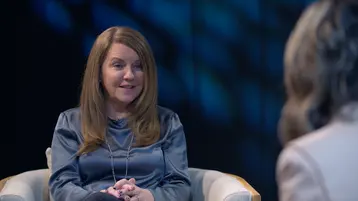
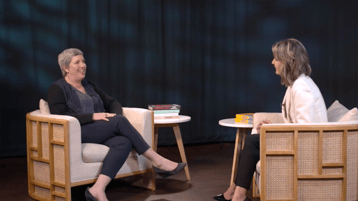
Burton sits down with Gary Swart, Venture Partner at Polaris Partners, to discuss being both a business leader and an investor in growing companies. In this interview, they discuss what Gary looks for in a potential investment, the importance of company culture in the modern workforce and, of course, why people matter most in all of it.

Burton Goldfield: Hello, I'm Burton Goldfield, President and CEO of TriNet.

Today, I'm thrilled to be joined by Gary Swart, general partner of Polaris Partners. Gary is a valued and longtime TriNet client, an accomplished entrepreneur and a thought leader in the world of venture capital. His company, Polaris Partners, is a highly regarded investment firm with more than 25 years experience backing transformational health care and biotech companies.

Welcome to the program today, Gary.

Gary Swart: Burton I'm thrilled to be here. Thanks for having me.

Burton: Gary, you've evolved from being a CEO of a tech company to an investor. Can you tell us about that evolution and what it means to your investment philosophy?

Gary: Sure. Well, you know, it's hard to go from an operator where you're driving the car to being now a passenger in the car where you can't grab the wheel. And so that's an adjustment for me, for the entrepreneurs that I invest in. Obviously, I know what a good board member, an investor, looks like. So I chose not to be the person that I didn't want to have in the car with me.

So that transition was a little bit rough. But I think my operating experience is valuable to the company because I've seen many of the things that they're going to see and can help them avoid the pitfalls, if you will.

Burton: So do you think you're easier on CEOs like myself or not?

Well, on you Burton, maybe not, but no, I think you definitely are a little bit more empathetic. And again, you understand what worked well... I understand what worked well for me. What board members did I want to take a call from as opposed to let it go to voicemail because I knew how the conversation was going to go.

Burton: So the firm has an amazing track record. You've funded over 400 companies. 50 of them became public. Can you tell me about what you guys are looking for as far as investing in a company?

Gary: Well, mostly it's about the people. And, you know, a key part of our strategy, as you mentioned, we've been around for 25 years, managed about $5 billion. And a key part of our strategy is to invest in what we call repeat entrepreneurs. We have more than 40 people that we've backed more than once. And so whether or not their first company was successful or not, we maybe invested in their education. But many of those obviously were successful their first time around.

So for us, repeat entrepreneurs are big part of our strategy. You know, a friend of mine early on said you can teach a chicken to climb a tree, but you're better off getting a squirrel in the first place. So we're looking for those personal characteristics that you can't teach in addition to big ideas and impactful companies.

Burton: And you've narrowed the focus somewhat to health care and life sciences. Does that help you in calling out the good opportunities or does it give you a lack of opportunity?

Gary: It definitely helps. And let me give you some context. When I started at Polaris, we were pretty evenly split between health care and technology. But when we started looking at our investments in our results, it turns out it turns out that we had a pretty good track record at the intersection of the two.

And so today we invest in therapeutics and diagnostics, digital health and health care services. And to your question about focus, that prioritization helps you to really hone in on more than enough ample opportunities in each of those sectors.

Burton: So you touched on CEOs, repeat CEOs. Can you talk a little bit about HR and culture? I know you’re particularly passionate about culture.

Gary: Well, the culture of a company I think is everything. You know, the company needs to have clarity as to where they're going, how they're going to get there, who's responsible for what and how everybody's going to be measured. In my mind, that is the that is the baseline of culture. It's not about snacks and yoga and pet sitting and all the things that mattered in a in a very much on-premise world. It's about people having the opportunity to make an impact and to personally and professionally grow, to have good financial reward and to work with other high-quality people. And so I think that's all at the foundation of good culture.

Burton: So you mentioned people working together. How has remote work impacted both the culture and the opportunities for you guys?

Gary: Well, Burton, you mentioned that my previous experience was at a company called oDesk, now Upwork, which was the pioneers in remote work. We believe that you could... you should be able to hire, manage and pay people regardless of where they live in the world. And we built a business around that. And this was well before the pandemic made everybody realize that work could happen remotely.

But we went from a world where it was 98% on-premise and a few percent remote. To pretty much the complete inverse. And what I learned running oDesk is we believe that remote work is absolutely fantastic leverage. You have over 3,000 team members spread across the U.S. and you know that those people are delivering every day.

Burton: Right. They are.

Gary: And so we believe that remote work is entirely possible. I haven't even answered your question yet that the hard part is if you think it's hard in person, it's even harder remote. How do you get people connected to the culture? What are the ways for facilitating the watercooler conversations and the serendipity that happens in the hallway in a remote world? And it goes well beyond Zoom or Microsoft meetings or whatever platform you're using to meet face to face online.

Burton: So to that end, what advice do you have to managers that are trying to lead teams remotely?

Gary: Well, first and foremost is don't underestimate how hard it is not only for them as managers, but for all of their employees as well. And how do you get those people connected to the culture and to the mission and to the job to be done, if you will, remotely. And thinking about it all the time. I mean, just simple things like the opportunity for everybody to raise their hand and speak in a meeting.

I know that sometimes it's hard in a Zoom meeting to be heard. Or to have your terms if you're facilitating a meeting what are the little tips and tricks you can do to get everybody engaged and included and feel like they're part of the conversation?

In addition to that, I think there's no substitute for getting people together at some frequency, face to face. I was in the office this past Monday for the first time in a while and it was fantastic. We weren't on our phones. We weren't on our laptops. We sat in a conference room. We talked. We had lunch together and I came home feeling energized from the face-to-face interaction with my partners. And I think there's no substitute for that.

Burton: On the other hand, you're able to access people from all across the country and all across the world. Do you believe you're getting better talent?

Gary: I absolutely believe you can get better talent than you could get within a 50-mile radius of where we're sitting—for a couple of reasons. One, you have the local talent wars despite the fact where the economy is, there's a local talent war going on. And, for you to get people to want to commute and travel to Dublin on a daily basis, Dublin, California, on a daily basis is really hard, regardless of where you may be.

And there's a lot of tailwinds that have enabled us to work efficiently and effectively online. We talked about one of them technology, but, you know, the economy and globalization and even demographics, young people have only grown up online. And so a lot has enabled it to be more accepted and accelerated today.

Burton: So TriNet has been proud to be a partner to Polaris for many, many years and partner to oDesk before that. Thanks to you. What changes in the relationship with the economy that we're seeing and the remote work and all the differences in the economy?

Gary: Well, I think, you know, companies nowadays are challenged. They're trying to do more with less. They're fighting the talent war, as we mentioned. They're trying to deal, if they're public companies or small companies, they're trying to get more done with fewer dollars. So they're looking for efficiencies. In addition to that, they're trying to satisfy customers and employees and investors and Wall Street. And if you think about all of the constituents, the job is only gotten harder, in my opinion.

And so with that in mind, you know, what TriNet has to do or I think could do is really focus on their customers. Really focus on their employees as companies to make sure that they're doing everything they can to keep those employees productive, engaged and happy.

Burton: So there's this argument. There's a war for talent. There isn't a war for talent. People are being laid off. I know we find it challenging finding amazing people. What are you seeing within Polaris and within the companies you fund? Do you still see the offerings around benefits and the onboarding to be important?

Gary: Certain things are still important, you know, but it's not about the perks. It's about can you get excited about the mission? Do you like the people you're working with? Is this an opportunity that's going to challenge you on a daily basis? You know, it's lonely working from your office every day. People don't want to wake up in 60 days and say, same job, different business card.

Burton: Yep, it's true.

Gary: They want to feel like they have an opportunity for personal professional growth and development. They want to feel like they're making an impact. And so with that in mind, I think it's giving people hard jobs, hard, exciting, fulfilling work at a high rate that needs to be fulfilled at a high rate of speed. And that's where I think that's better for a culture than perks—you know, my gym membership and my free lunches and the like.

Burton: So how does Polaris differentiate itself?

Gary: Well, it's interesting. You know, we invest at the intersection of health care and technology and we are located in three major cities. We're in Boston, New York and San Francisco, soon opening a Singapore office. And that global presence, I think, is one differentiator for us. But we have a really diverse set of skills around the table. Let me give you an example.

So I come from a tech background. My partner, Dave Barrett, who you also know Dave, was my boss 100 years ago and Dave is a very seasoned operator and has been there, done that for many, many years. We have some big pharma folks. So one of my partners ran consumer products at Pfizer, another ran Corp. Dev & Strategy at Lilly. We have MD MBAs, so people with more degrees than you and I have combined that they got at the same time. So very, very smart, seasoned doctors who chose not to go into medicine as a full-time career. And then we have some scientists.

And so, if you think about health care, therapeutics, diagnostics, digital health and health care services, we check all of the boxes and have relationships in all of these areas. So, we think that we add outsized value and can bring outsized value to a company from our network.

And the fact that we've been doing this for 25 years, unlike some other investors who maybe just said, “Hey, we should get into health care because of COVID.” And a lot of those investors, by the way, have already, now that we're on the other side of the COVID rotation, they've ran out as fast as they came in. So I think it's a combination of all of those things.

Burton: You mentioned geography. You have this diverse geography Is there any geographies that are booming right now? What are you seeing different than you saw four or five years ago?

Gary: Well, you know, a bulk of the companies are still centered around, you know, where the domain expertise exists.

Burton: Right.

**Gary:**Like pharma, for example, is, you know, Boston and New Jersey, New York. And now South San Francisco, huge biotech boom offshore, Genentech and the like. But we are seeing a little bit of decentralization, you know, things spreading out. Obviously, a lot of folks have moved to Florida or Texas. And so you are seeing the startup ecosystems start to spread out a little bit. But I think it takes a lot of time for those ecosystems to develop and get to the point where they really can support innovation at scale.

Burton: What do you see in the future, in the next six to 12 months? Everybody seems to be on one side of the coin or the other. Which side are you on?

Gary: Well, it depends on what coin you're talking about, Burton. From an investment standpoint, I would say that innovation is at an all-time high.

Burton: Right.

Gary: So, yes, there have been layoffs. A lot of people have chosen to leave. One comment about that last quarter was the first time that we saw regrettable churn decrease versus planned churn, meaning layoffs. So I think a little bit of the power has shifted back to employers now, where they get to control, because I think people have said, “Wow, I should be happy to have my job, especially if I like it.” But a lot of people left and that means that there's more talent in the market to help facilitate these startups.

There's also money in the market. There's a lot of money on the sidelines and seed investing. So at the very earliest levels was the only category that grew year on year. Everything else has decreased, whereas seed is actually up. So what that says is that there's a lot of dollars going into these earlier stage companies, which is just one example that innovation is at an all-time high.

So you've got the talent, you've got the dollars and there's a lot of problems that need to be solved. Not only in healthcare and technology, but the environment and, you know, pick your problem. There's a lot of problems to be solved. So I think it's a really unique time to be to be investing.

Burton: So I think for TriNet and for your business, these new company formations is a critical part in the future of our company and yours.

Gary: Absolutely. I was thinking about that with you in mind. This is a great time for TriNet.

Burton: It is. It is. And you should be getting more opportunities to do second-round funding and help companies grow with the ideas that are successful and have gotten a trial period.

Gary: Absolutely. What you're also seeing in this environment is, you know, because the public markets are so are down year on year, there's a lot of people looking for alternative finance.

Burton: Sure. I didn't think of that.

Gary: So debt markets or M&A. Similarly, there's a lot of large companies that are realizing in order to be competitive in the future, they're going to have to transform digitally. And so maybe this is a good time for them to be sort of outsourcing innovation, looking to pick up assets that are accretive to their businesses. And it's not just to help them run more efficiently, it's to meaningfully impact their bottom lines as well. And so we're seeing a lot of activity, you know, in the early stages, but also in the mid-market as well.

Burton: And in fact, we bought Zenefits this year and are thrilled to have the Zenefits team on board TriNet. In prior years, that probably wouldn't have happened.

Gary: That's exactly my point. So you had an opportunity to make one and one equal three. You could acquire a business and the timing was right and it was accretive to TriNet.

Burton: And are you seeing acquisitions part of the strategy of where Polaris is going?

Gary: What I say, Burton, to my entrepreneurs all the time is put yourself in a position to say no, like everything is always for sale. Now you don't want to make it a distraction because, you know, as part of this, companies have had to focus, they've had to reprioritize. It can't be this and that, we can't build this new product and go international, we have to pick one of those two things. And so that prioritization, the last thing you want is another distraction. So as long as it doesn't come at the expense of your priorities, I think it's a great time to be networking and getting to know others in your industry who could be accretive.

Burton: We love the partnership with Polaris. Thank you for being a great customer. We appreciate you talking to the team and we would love to have you back in the future.

Gary: I'd love to come back any time. Thanks for the opportunity.

Burton: Thank you.

Get the latest HR trends, insights, advice and more sent straight to your inbox.