HR Knowledge Hub
Join us as we explore how a 30-year-old custom merchandise business is transforming itself through AI with Eric Turney, President of The Monterey Company, a Bend, Oregon-based manufacturer of custom promotional products. Discover insights on AI adoption in small business, work-from-home as a privilege, retaining talent on a 12-person team, and why the Pacific Northwest leads the country in employee AI usage.
Join us as we explore the rapidly evolving world of search and AI with Jasmin Weber, Client Strategy Owner at DTC SEO Agency, an Austin-based firm helping direct-to-consumer e-commerce brands grow through organic search. Discover insights on SEO in 2026, generative engine optimization (GEO), AI fluency, and how small businesses can show up in ChatGPT, Perplexity, and Gemini — not just Google.
Join us as we explore the future of distributed healthcare with Dr. Givona Sandiford, Founder and CEO of Melospeech Inc., a tech-enabled mobile speech therapy company serving children across California and beyond. Discover insights on building self-managed teams, where to draw the line on AI in clinical work, how to design benefits that actually matter, and why letting go is the hardest skill in leadership.

The State of Work with Jesse Rack (Southeast)
Join us as we explore how to scale a family-owned trades business with Jesse Rack of Rack Electric, a multi-energy platform serving South Florida. Discover insights on building a brand from 5 to 160 employees, hiring for attitude over skill, integrating AI into the trades, and why generators are quietly part of the AI supply chain.

.jpg?format=webp&quality=75&disable=upscale&width=358)

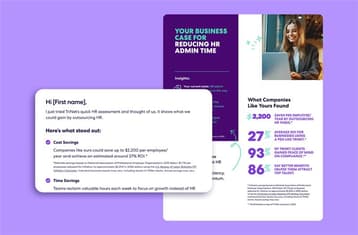
Use these insights to guide next steps or align with stakeholders.

Join us as we explore the practical difference between AI and automation with Jimmy Lowery Jr., Founder and CEO of Simplora, an AI-native meeting workspace built for modern teams. Discover insights on generative versus agentic AI, why burnout starts at the identity level (not the hours level), and how AI adoption strategy should scale very differently for a 50-person company, a 500-person company, and a 5,000-person public one.
.jpg?format=webp&quality=75&disable=upscale&width=358)
Join us as we explore the future of physical workspace with Stephen Hargett, Co-Founder & CEO of wrkspace, a platform building the execution layer for physical space operations. Discover insights on why "work-life balance" is the wrong frame, how thoughtful design can do what signage can't, why coastal tech assumptions miss in the Rust Belt, and what it takes to make people actually want to come into the office.
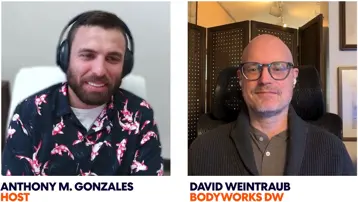
Join us as we explore how to scale a hands-on, hyper-physical service business with David Weintraub, Founder of Bodyworks DW Advanced Massage Therapy, a two-studio medical massage practice in Manhattan. Discover insights on niching down, surviving COVID's existential threat to in-person work, why guaranteed income beats commission-only in the long run, and how AI overviews are quietly rewarding businesses that publish deep, specific expertise.
The State of Work with Marcus Mossberger
Join us as we explore the evolving world of work with Marcus Mossberger, Chief Market Strategy Officer at LYTIQS, who is reshaping how organizations think about workforce intelligence and strategic planning. Discover insights on employee engagement, agentic AI, work-life integration, and the rise of the portfolio career economy.


.png?format=webp&quality=75&disable=upscale&width=358)


.jpg?format=webp&quality=75&disable=upscale&width=358)
.jpg?format=webp&quality=75&disable=upscale&width=358)