Part 2―How Digital Transformation Helped Save the Day
Digital transformation is the process of using information technology to streamline, systematize and scale-up manual business processes. Pre-pandemic, many businesses had placed digital transformation on their back burners, but the times turned it into a top priority overnight. This was especially true for organizations that were still cutting paper checks, using hand-signed contracts or relying on other manual processes.
Leaning More Into Technology
The study found that top technology adoptions had shifted to center on people connecting with people as employees and customers adapted to working remotely in greater numbers than ever before.
The top technology upgrade reported by survey respondents was video communications technology—adopted or upgraded by the majority of survey respondents (58%). Internal communications tech (cited by 40%) and customer relationship management (CRM) platforms (29%) came in second and third.
To support these findings, 71% of respondents said they have adopted new techniques for reaching and communicating with target audiences. And respondents who adopted human resources technology reported the biggest workforce management gains due to tech upgrades.
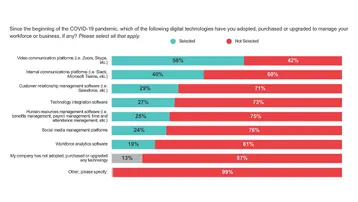
Video communication was the most popular investment but small businesses also adopted internal communications and customer relationship management software:
- 40% invested in video communication platforms
- 29% invested in internal communication platforms
- 27% invested in customer relations management (CRM) software
Spurring many of these upgrade efforts was an increased willingness to purchase business products and services online, as was reported by 35% of respondents.
Short-term or Long-term Fix?
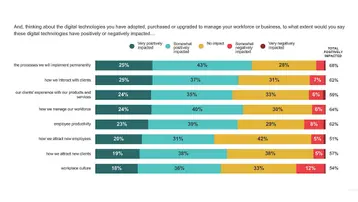
Among those business that adopted new technology, a majority reported that technology has positively impacted “processes we will implement permanently” and “how we manage our workforce” among other objectives.
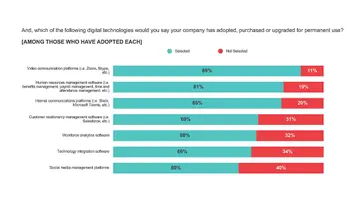
Across all categories of tech products and services, a majority said they will continue using them long-term. The greatest example is video communications platforms in which 89% of respondents said they will adopt it for permanent use.
AI: Not Just for Big Business
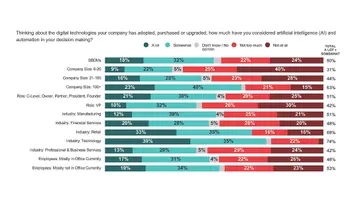
Many businesses have considered artificial intelligence (AI) and machine learning in the technology they’ve adopted. About half of small business decision makers said they have considered AI and automation in their decision-making regarding new technologies to adopt, purchase or upgrade. A quarter (24%) said they had not thought about it at all.
Adopting New Ways to Reach Your Audience
Digital transformation has brought new ways of reaching a business’s target audience and the survey found it was having a strong impact. A total of 71% agreed that they were adopting new ways to reach audiences and 72% were changing their approach to marketing and advertising.
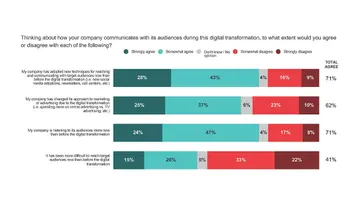
With new ways to use audience data, businesses were getting more creative in how they reached their audiences through new social media channels. “It’s not just Twitter anymore, not just Facebook advertising, but TikTok and Instagram and other things are becoming a means of reaching new audiences,” said Trice. “If you have a new technology to reach a new audience, it's really helping your business grow.”
In fact, a total of 87% of those who have adopted new ways to reach target audiences said the new methods have had a “very” or “somewhat positive” impact on their company’s growth. Since technology is only as good as the people using it, business leaders acknowledged worries about their ability to address employee needs going forward.
Coming Up
Look for more highlights in upcoming articles of this series as we take a deeper dive into other aspects of the study including:
- Remote work and its impact on workplace culture
- What this all means for the future of business


