Creative Entrepreneurship: Unveiling the JOAN Behind JOAN Creative

Episode 32
 | 
Published: September 14, 2023
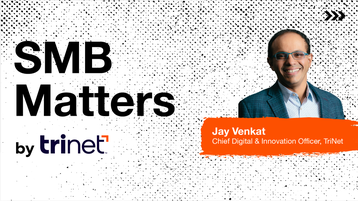
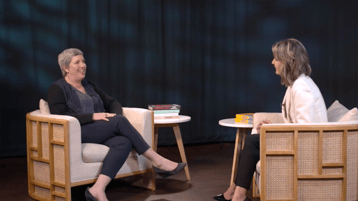
Lisa Clunie, Founder & Co-CEO, JOAN Creative Jaime Robinson, Founder & Co-CEO, JOAN Creative Samantha Wellington, Executive Vice President, Business Affairs, Chief Legal Officer and Secretary, TriNet Creativity is necessary in every business and every trade. But how do you unleash the creativity of your team? It starts with creating safety and expecting creativity. It also helps to be true to oneself and encourage others to do the same.

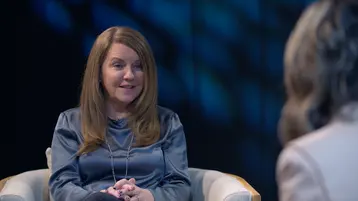
Samantha Wellington: Well, we're nearly there, so nearly at the end of these incredible three days, and I am super, super happy to be nearing the close of PeopleForce with two fantastic women, the brains behind Joan Creative, which has been lauded as the full-service agency that the world just didn't see coming. After launching in 2016, Joan Creative was celebrated as one of ad agencies to watch in 2018 and just two years later, they were named Small Agency of the Year, an award that they won again, just last year.

Joan asks, what would Joan do? And in so doing pays homage to the legendary women such as Joan of Arc, Joan Chen and Joan Jett. It is made up of all of the Joans who have ever been: super modern, but long-lasting. And that is the spirit of Joan Creative, where the secret sauce behind their success is their people. So please welcome to the stage the absolutely fabulous Lisa Clunie and Jamie Robinson.

So we were talking backstage about how we were all going to dance on, but we didn't quite get really dancing music to like bring us on. So I felt like we were sort of swaying on or something. Anyway, so I also forgot to mention you all are wonderful clients of TriNet as well. So thank you for being clients of TriNet. We like to celebrate our clients. Let's talk about a high-level understanding of Joan Creative. What is the Joan Creative difference?

Lisa Clunie: Right. I don't know if you are very familiar with the creative agency, advertising agency landscape, but there aren't very many female founders. Would you say? Unfortunately, still in 2023, it's a very rare thing to have two female founders. And while that's really special for us, and I think for the people who work at Joan, it's really not the only point of difference. There's a lot of creative agencies that build long-term brand platforms. And there are a lot of agencies that build short-term brand momentum, but very few that understand how to build big brands through really modern ways and really modern tools. And that is the difference actually of what we do versus what most agencies do.

Samantha: The idea of the full service.

Lisa: The full service. And sort of modernizing legendary brands. Loving it. Keeping the soul and the power of a brand but doing it through really modern ways.

Samantha: I love that. And actually for those of you who were here on the first day, I did ask a pop quiz question, which is what do you notice that's different about the stage?

It's not different this time, so we didn't ask. But, we are three women sitting on a stage, not a man on. One of the really awesome things that I have learned about Joan Creative is your approach when it comes to collaborating with your customers and your audience. Like, seeking first to understand, focusing on behaviors, drilling into like the why behind the what. Can you tell us a little more about that approach and how it's helped the business to accelerate?

Jamie Robinson: Yeah, you know, we're in the business of behavior change and one of the things that you can't really change behavior unless you know what the behavior is you're starting with. So, that's for our audiences and one of the things we always do is invite our audiences in some way to help us build the story of the brands that we work on. And part of that is because when you work on a brand or you can choose to contribute to somebody's story, you become forever devoted or part of that story. With our clients, collaboration is incredibly important and the reason why it's actually twofold. One, the brand they're building. It's part of their soul, too.

So we need to be working with them. The other thing is with the ad industry. So many talented people from the ad industry have now gone to become clients. So when we're working with our clients, it's often like working with people that we've, actually Lisa and I have worked with in the past. So collaboration is really key. And one of the things that I love to say, we love to say, and I've always felt in my bones, is that everybody can be creative and everybody can have creative ideas. Some of us have just been told from when we're really young that we're not the creative one. But that's bull. That's total bullshit.

Samantha: We didn't prep this at all, but you just took this to a place that I would like to explore a little bit, which is this idea of like, everyone can be creative. And there are absolutely folk, I think, who potentially feel like, "Oh, well, I'm not the creative one." I'm the accountant or I'm the math person or I'm the lawyer or I'm the whatever, right? Lawyering is actually very creative if you're good at it, but that's side-to-side topic. How do you unleash that in people? Like what is the trick? Is there a trick?

Jamie: First it starts with safety. So you have to create a space. Oh, I've got a hair right here. There we go. Yeah. You have to be vulnerable and so the case in point, but it's about creating safety. I think it's also about expecting it of people, expecting creativity from everyone. Lisa and I expect creativity from everybody who works at Joan. It doesn't matter if they're in finance, or if they're in IT, or if they're in, you know, every part of our organization. And so I think that is that. And, yeah, there's an improv technique which is called "Yes and."

Samantha: Oh my god, I love that. I use it as well. I love it. Yeah.

Jamie: When you take somebody's idea and you don't shut it down right away, but you say, okay, let's go there. Yes and let's build on that. Then, all of a sudden, the heat is generated and they can be creative whether or not somebody called them a creative or there's creative in their title. They now are part of the ideation, which is wonderful.

Samantha: So that tip, and we're going to do takeaways and sort of, key things you can do differently tomorrow at the end, but I'm going to bother calling it out now, just in case I forget. The "yes and" thing is incredibly powerful. It's a way to stop yourself from saying no and a way to move forward with an idea. It promotes inclusion, which promotes collaboration, because that idea of psychological safety is what unleashes creativity. When people feel safe, they feel like they can give you their ideas. And if you're not saying, you don't say, "No, but." Rather, you say, "Yes and." And how do we continue with that? It's such a wonderful tool if you're not using it yet.

And if you take nothing else from our conference, take that. It's really good. Alright, so, we're sort of talking about this idea of metrics and core values coming together. Like the thing that you put out into the world and how you count it. And the core values that you have inside of your brand. And one of the things that I've heard you say is, that, "would I give a crap about this if I wasn't working on this brand," as a metric and I kind of love that metric. I think it's fabulous.

Let's talk a little bit about the KPIs that you actually use at Joan, because you're in this digital-first world. You're working sort of in a world where I would imagine you have KPIs that can be looked at in real time almost, which I think is probably very different to the way that traditional campaigns are run.

Jamie: Yeah, you know, I'll talk about the KPIs that get me excited, and Lisa, then you can maybe talk about the KPIs that get you excited. And some of them are, I think, shared. But one of the things that we can see immediately when we put something out is the reaction it has with our audiences. And that is due to the beauty of social media, right. When you put something out into the world and let's face it, most of us engage in social at some point in the day. Some of us engage many hours of our day in social, but you can see the comments, the likes, the shares, and you know if it's something that's touched a nerve and that people want to be a part of it.

We did a campaign for a company called ZenBusiness, which is a company that helps entrepreneurs start up. It's a wonderful company. And the campaign was all about getting people who are moms to start their own business. We read the statistic that 3.4 million moms left the workforce during pandemic. And so, we were like, that's terrible. Why? Because the workforce doesn't work for working moms in a lot of ways. What if we get these moms to start businesses that change the policies. So we did this campaign for them. We did this promotion. And one of the things that was so gratifying. It was to see thousands of women and men tag moms that they knew in the comments and say, "Go ahead and start this business. I believe in you." That! That is the thing that gets me personally out of bed, when I can see people engaging in our work and passing it forward.

Lisa: Yeah. I would add, I love that. I think it's like, do you really matter? Like, brands really asking themselves, do they really matter, I think is part of that. I think the other KPI, as Jamie's our chief creative officer and I'm the CEO of Joan, and one of the things that I think about a lot is the KPI of “are people excited?” Are they energy givers? And work and being excited about your work creates energy, right. You're presenting it and you're filled with joy, or you sold something and you can't wait to make it, or you see it in the world and it affected you and you feel so proud of it. And those metrics also really count. You know, the performance in the world, yes, but also the pride.

Jamie: One thing I want to say that Lisa's exceptional, I'm going to just shout you out because, I love you, is really paying attention to our company and being there. Like I remember during the pandemic, things were tough and you were so good at fostering that community, even being far away from people, but really making sure that people are feeling that they're contributing. I love that.

Lisa: Go on.

Samantha: She's like, okay.

Jamie: You are a brilliant CEO. And very funny lady.

Samantha: Alright, so we're on team. We're talking about people and team. Could you talk a little bit more about the team? How they approach solutions? We talked about, "yes and,” but how do you cultivate creativity and your approach to attracting talent, which is part of what helps set Joan apart, is the talent that you all have.

Lisa: 100%. And I think we do this really differently. You know, part of being female founders is that people expect the company is going to be different anyway, because most of them have never worked for women. But part of that is making sure our kitchen table seats all kinds of interesting people and many people who've been historically excluded from this business.

So our people are interesting. They join a company whose belief system is that. Many of them represent people and communities that have been passed over by advertising or not seen or respected or invited in to the internal conference rooms of the advertising agencies. And so there's a lot of room created for each other, right. It's a very empathetic crew. It's a cross pollinating of ideas kind of crew. It's naturally inclusive that way, which I think is really different. So we find people from places that most agencies don't actually look for people. And that's why maybe they say, "I can't find anybody like that."

And you say, "Well, are you looking in the right places?" Because we can find lots of them, you know? So we look for people who don't fit the typical mold because they're going to bring way more creativity and different perspective and interest and they'll challenge, than if you find kind of the same old, same old over and over and over again.

Samantha: And so you mentioned internal conference rooms and you also mentioned making room. You were using it in a different context, but you do have a Pinterest conference room that I think you should tell people about, because it's kind of cool and it speaks to, I think, the brand.

Lisa: You should tell people about it.

Jamie: So, we got a call from Pinterest. Do you guys know Pinterest? And they said, "We're looking to get, we're trying to find three incredible hot shops." I said, "thank you." We also then said, "Go on." But, that we want to make over their boardroom. And the thing that we were gonna do, the whole premise was that they were gonna come in and then we were going to sit with Pinterest board and we had about 10 people from our company.

Lisa: Yeah.

Jamie: Come in and pick out and come up with a theme that we could redo our conference room. Now we had just moved into a new space in January, and so our actual interior designer was like, I think she went ghost white, when we told her that we were going to redo, undo all of her work, but it was just in one conference room. But we came in and so we did, our theme was a time machine stuck in 1976. So it had a very groovy vibe. But it was post-apocalyptic, which is why the time machine was broken in 1976. So, it's all this kind of pink velvet. By the way, they came and did a makeover based on our pins. It's all pink velvet. But then there's like, crazy mushrooms growing on the board on the walls and like, you know, all this fake lichen and like, it's like part groovy, part “The Last of Us.”

Samantha: It's fabulous. So if you want to see it, you can Google it. If you look up Joan Creative and Pinterest room, you can find it. There's a YouTube video of it. It's really quite fabulous. And I can imagine the creativity that would come out of any of us if we were working in a conference room that looked like that. Now, just whilst we were doing that, there was a poll that we did online. And we were asking folks, how many of you already use "yes and?" And surprisingly, I find this surprising, like, most people are not using "yes and." It's such a powerful tool, you guys. Like, it's really powerful. So I highly encourage you to give it a go. Alright, so let's talk about your clients and shifting perspectives. So do you think that your clients have shifted the way in which they perceive their customer base from when you started to today? And if there has been a shift, what do you think has contributed to that shift?

Lisa: I think there definitely has been a shift. And I think some of it is the times that we live in. When we started, it was 2016, this was pre-pandemic. Many things about culture were sort of seen as a monolith. You know, you would be attracting an audience, the audience had age demographics or something like that, and the insights about them were sort of generic, they were kind of boiled to the most obvious things.

I remember saying to you, "Oh, she likes Ellen DeGeneres. Oh, she and only she likes Ellen DeGeneres.”

Jamie: Yeah, that's right.

Lisa: This is the audience like, everybody likes Ellen DeGeneres, what's your problem? Anyway, so the insights were very generic, right. I think post, I would say post George Floyd, post-pandemic, the polarization of the United States has revealed more nuance and asked more of us, I think, which really needed to happen, about whether really are all people like, you know, able to be categorized by these pure demographic chunks. And I think our clients, and I would say our friends, and our community, and our industry, really took a step, a major step forward in embracing subcultures, multiple identities, intersectionality and things that were always there, but to be frank, weren't really paid attention to.

Samantha: Or believed in.

Lisa: Yes, in many cases.

Samantha: Yeah, yeah, yeah. So, something terrifying, for me terrifying, that I learned whilst watching some of your fabulous ads—you can also see some of the ad campaigns that Joan Creative have done on their website. They're really very interesting—is that women are 20%, 27% less likely to receive CPR when it's needed from bystanders than men. Why? Because all you men are scared of our boobs. This is true. This is true. So Joan did a fabulous campaign for Womanniquin, which is a CPR mannequin that has breasts. And a lot of your campaigns are like that, they're kind of, they're mission-driven and they speak to society. How do you choose your clients and how do you decide who to take and is it scary to turn a client down?

Jamie: Well, I think when Lisa and I meet a client, a prospective client, we're trying to figure out, some agencies will look at a client and say, "Is that brand a cool brand?" You know and we can probably think of who all the cool brands are, right? When Lisa and I started, we were very clear that the brands that we would consider the cool brands were actually the least interesting to us because we wanted to be able to make a difference. And you know, if someone does, like, listen, we wouldn't turn down Nike, but if someone does like a great campaign for Nike, Nike's already a great brand. If we're looking to make it for, we said Buick actually would be a really, if there's anybody Buick marketer.

Lisa: Bless Buick.

Jamie: Bless them. They could use some help, right? So anyway, so we were like, "Let's find those kind of brands and try to make them over." I think for us really, when it comes down to who we take, the clients we take on, we're like, who is the person that is sitting across the table from us? Are they a person who has the same values that we have? And those values are, sure, to your point, do I want to do what's right for the world? Do I want to put better things into the world? Maybe mission-driven or just maybe not junking it up with crap, you know? But also, are they visionary? Are they brave? Are they people who have a dream that's bigger than just getting it done. Those are the kinds of people that we look for and those are the kind of clients we take on.

Samantha: It's awesome. Alright, so this has been amazing. I think a lot of what we have talked about here is not exclusive to the ad industry. Certainly not "yes and." Anyone can be using that. The idea of why not. Staying true to yourself and having self-awareness to sort of speak up for and to include others. I think those themes can be applied in any industry. For me, other than "yes and," today's call to action is application of the “would I give a crap” metric. I love it, the “would I give a crap metric.” Passion and purpose is a lot easier to manifest and find when you give a crap about what you're doing.

So start trying to apply that metric to decisions about where and how you work. Would I give a crap about this if I didn't work here? And if you wouldn't give a crap about what you're doing, why are you doing it? So do something different tomorrow to what you did today. That is the call to action for today's session.

Thank you everyone for being here. Thank you to both of you for being here. It's been wonderful.

Get the latest HR trends, insights, advice and more sent straight to your inbox.