Talent and Org Strategy from a VC Perspective
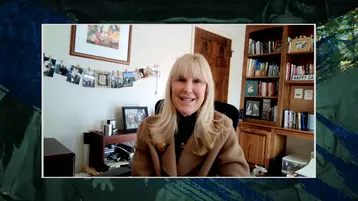
Kristin Russum: Welcome. I'm very excited to have you all here. My name is Kristen Russum. I am a director of Organizational Development at TriNet supporting our clients through their organizational journey. I am joined today by Amy Lepiccolo. Amy has a background in human capital consulting, working with Accenture and Deloitte, and has recently transitioned, I'd say recently, but you'll talk about that over to B Capital, where she supports around 160 portfolio clients and those clients range from seed to pre-IPO. So we've got some really great information. I think that everyone here will glean a lot from Amy. Most of your clients are in the tech space, right, and that thing. I was hoping Amy, you might be able to tell us, I mean, moving from a large consulting companies into really small companies typically, what made that jump and tell us a little bit more about that?
Amy LoPiccolo: Sure. Thank you and thank you everyone for joining us today. We want to make it really conversational, right? And pretty intimate. There'll be time for questions at the end. But thank you for joining and we'll have a good chat. So yes, I started my career in consulting and then just really was excited about tech startup, and the innovation, but also, to me, when I came to New York in 2007, we were sort of phasing out of that big bank, big finance world. I really saw the next big thing really happening at the time was tech and I just couldn't wait to get into it. So, I had the opportunity to move over to the venture capital side.
And so in my role, I still work in a bit of a consulting capacity. But instead of working with Fortune 50 companies, large companies and some SMBs, I work with the greatest tech innovators really in the world. Not surprisingly, they have similar challenges that many of you probably face if you're in larger companies working on the people side or smaller companies. So, we can lever the conversation up and down depending on what the audience is.
Kristin: I love It. Well, I know that when we were chatting a little bit, getting prepared for this, what are some of the top things that you're dealing with, and one of those elements that came up was a lot of the explosive growth that we saw our clients do in through COVID. Now all of a sudden, these organizations are faced with controlling cost and really having to cut back and that typically translates into headcount reduction. And I know that Amy, that's been something that you've been working with some of your portfolio companies to deal with. So, maybe you could walk us through. What are some of the key elements that organizations who are having to face this really difficult decision, what should they be looking at? What are the things that they need to be paying attention to?
Amy: Sure. Yeah. I don't know how much of the conversation so far through the event has been on reductions and how the macro climate is impacting our jobs day-to-day. So forgive me if I'm a little bit repetitive, but, it's tough out there, right? Especially for people, we went through a really challenging time during COVID, just trying to keep our organizations sane and healthy and cohesive. And then we reached 2021, when the macro situation impacted us from a financial standpoint, and yes, many of our companies, I'm sure many of yours, have thought about, have done, or are planning to do restructuring or realignment.
So, I've worked with a lot of the companies that my firm invests in, as a people partner personally, to think about these restructurings. And it really comes down to where we are at this point, many of our companies are moving to a place where growth at all costs is gone. That was a fun 2018, 2019 theme. Was it the best for us all? We're realizing now, perhaps not. And so I hate to say, "do more with less," but what we're really encouraging our companies to do is to get very singularly focused on what their goals are. So whether you use OKRs or another format to establish what your strategy and what your goals are, it's very important to build your organizations, to build your talent around that course, small set of goals.
So who do you need? What are the capabilities of those people to achieve the short term, and in the case of many startups, they are shorter term goals or longer term goals to achieve those, and every organization should really reflect that. So really, in summary, it's making sure that you understand who you have for talent, who is performing and who may not be performing and making sure that you are guiding your leaders and managers to build their organizations toward those really singular core set of goals.
Kristin: I think it's interesting when you think about when we contract. A lot of times there is an urgency to that, and there is this Hail Mary. And a lot of times we see organizations just start slashing without a lot of thought or really planning around who needs to stay, and I love that connection to goals because that is so really critical, is you have to tie—what are the objectives of the organization and really being able to identify, what are the critical roles that you have in your organization right now that will help you execute on that? Don't just go for dollars. Would you agree with that and how do you guide clients to get to that place?
Amy: I absolutely agree with that. And in fact, I think we saw a pretty tangible example of that in 2020 when companies were very reactive. I think in the second quarter of the year when everything shut down, we saw a lot of companies contract and reduce their head count quite a bit just to, I don't know, three, four, six months later, go on another hiring spree. So while the economy hasn't rebounded in the way that it did, unfortunately, in 2020, I think a lot of companies learned that lesson that they have to be a lot more thoughtful about how they're moving through their restructuring or reductions. And so, some of the strategies that I work on with our portfolio companies include, not just in times of reductions, but making sure that throughout the year you have a really great understanding of who your talent is. Hopefully everyone's doing performance management and believe it or not, a lot of companies don't, and I'm tech in the earlier context.
But even just out aside from regular performance management, do you have a strong talent assessment process, and do you know who your high potentials are, and how are you nurturing and fostering those people and then how are you working with employees who are just not the right fit and what's your approach to that? And so, talent assessment is a big one that we work on with our companies. And then going back to the goals point, do you have the right people in your organization for the next six, 12 months that are going to help you meet these goals?
So a tangible example of that, that I work on with our companies is, not surprisingly, most of our company's goals are focused around revenue or cash flow, break even. So we're seeing many companies being really thoughtful about how they're retaining and growing their 'go to' market teams. And that doesn't mean that our back office or business G&A teams aren't important either. But it's taking a look at those and understanding how can we leverage the great talent that we have. Do we need to grow or do we need to come up with another plan? So really I think a lot of it is on our people to be very strategic in these times outside of the day-to-day operational things that I know that we all do.
Kristin: Wait, it's interesting. A lot of times when we talk with our clients we get this "Well, I don't want to be too corporate,” or “I don't want to be too HR. I don't want to be so, you know, I've come out of a large organization, and they had a bunch of programs and structure, and I don't want to do that." And yet, my counsel to these clients is that often you have to have the structure. You have to have some infrastructure in order to support your employees in the most effective way. How do you overcome that resistance? Because I know it exists all the time.
Amy: Well, thankfully or unfortunately, we have a lot of examples to point to over the past three, four years where, if you didn't have structure, it's now biting you in the, so thankfully we can point to that, and sure, yeah it's hard to get companies, clients to focus on that kind of structure when they're just moving at the speed of light. But again, there's so many examples in the people space, particularly around growth where that approach of just finger in the wind has not worked. Reactive. Has not worked out for us. And so it might be about restructuring your priorities a little bit. Yes, maybe we're not going to spend as much time, our effort on L&D this year, but it's really about getting rigorous about our workforce planning, about our compensation philosophy and plans. Those are the things that most of our companies are working on now, and you find the right level of structure detail that's right for the culture.
Kristin: Absolutely. When we think about that structure, again, I was a little bit flippant saying that most of our organizations are not interested in the HR corporate structure. But often, and you brought this up, is that they're just so busy. And so that really makes me think about that opportunity that leaders have to be reflective and to just pause for just a second to say, "Are we doing the right thing? Are we spending our money, which is now a very limited resource? And are we putting the right effort where we need to go?" And I think that is an area that I see a lot of companies still very reactive, but they don't take that time to pause and go, "Okay, what should we be doing? Where should we be focusing our attention?" Any thoughts around how we guide companies to do that type of exercise?
Amy: I mean, now I'm beating this drum on the objectives and the goal setting. Maybe I'm oversimplifying, but it really comes down to what do we need to achieve? And unfortunately, for a lot of the companies that I work with, it's quite that simple. Like, we have to meet our revenue goal. We have to be cash flow break even. And so everything you do really should be built around that. And it's an interesting time too. I mean, I'll just make this point. I think a lot of people would take that comment or look at that and say, "Well, is that going to impact our ability to innovate? Or are we going to come out of this period?" If you've been through these sort of downturn cycles more than once in your career, you'll sort of know that when you're in this period, trends emerge and then years later you reflect and find, okay, innovation might have been down. I don't think that'll be the case. I think we'll find ways to innovate in different ways. But right now, I mean, everything needs to be pretty singularly focused on the task at hand, which again, I come from the space of tech startups. That's just…
Kristin: …the nature of the beast, right?
Amy: Keeping the lights on.
Kristin: Well, you mentioned, making sure that we have a focus on compensation. And I know that a lot of the clients that we've been working with have really struggled keeping up with compensation. We are in the craziest compensation market that I've ever seen, where whatever number you looked at last month is vastly different. Now, that trend is slowing, which is great, but what it has done is created what misalignment or what HR geeks call compression. And that's where you might have an employee who is making $100,000 and you've had to hire somebody in who's doing the exact same job, maybe with some of the same experience, making 20, 30, maybe 40% more because that's what the market demanded. So now you've got some real challenges there. And I know you've mentioned having to work through some of those. Can you talk through how you might help clients to thoughtfully, and that's the key word, right, thoughtfully execute on getting some alignment in a misaligned compensation world?
Amy: First we say, "I told you so." No.
Kristin: We do actually.
Amy: I know all of us, HR professionals are like, "We said that. We told you not to give that offer." Right. So hindsight is of course always 2020. I think many of us saw this coming and it's a real, a big challenge for leaders now. And it's hard. I mean, I give a lot of grace to leaders who got caught up in the moment and hired people at these crazy salaries because, you know, they had three candidates and all of their offers are being turned down because, you know, you literally go across the street and get 50% more. So I do. I have a lot of sympathy and grace for leaders who were hiring at that time. That being said, we are now in a moment of, in some cases, fairly extreme misalignment, or compression and budgets being held or reduced. So, I don't have the silver bullet answer.
Kristin: Yeah, there's no magic, right? Like the crystal ball there?
Amy: What we do now, I'll just say, like, you know, if you're in this situation, you're certainly not alone. Most companies are dealing with it. And so now you need to have some pretty rigorous process around reviewing your budgets and going back to the talent management piece, who do we really need to meet our goals, and who do we really need to retain? And so if you're in a private environment looking at potentially innovative ways to compensate people through equity, and other means that, you know, aren't directly cash, and communicating with all of your people, but communicating with your people who may have come in sort of outside of their band.
And let's say in this situation that they're performing really well, we have to be up front with them and say, you know, it's just really not in the cards to give you an X percent increase year over year, we have to try to relevel a little bit. And I have spoken to a lot of executives at least, and some individual contributors at that level. And I think most people are fairly understanding that they were a benefactor of the crazy hiring market, and in a lot of ways don't expect to be bumped up year over year, quarter over quarter, for some roles. That's the best-case scenario, and for other people, they may be in for some disappointment.
Kristin: A little bit of a shock.
Amy: A little bit of a shock. And for our employees who did not benefit from the hiring market over the past few years, it's going to take some time and some real, you know, pencil to paper with the budget to see how we can help bring those people…
Kristin: …equalize a little bit?
Amy: …to equalize them a little bit, and again, more communication. If I could just leave you with anything, it's please guide your leaders not to shy away from this, to address it, to of course we're not… There's varying levels of pay transparency across different geographies, and of course, companies. But really guide your leaders to if there's a big issue in the organization address it in some way because we all know that people don't talk about comp, but everyone talks about comp. So to ignore it is going to be pretty culturally damaging.
Kristin: It's a little bit silly to shy away from that. Well, I think that leads me to the idea of that process and structure. One of the things that we love to introduce as a compensation philosophy, which is really more, you haven't heard of it, it's really much more of an organizational mantra around compensation. How do we deal with compensation? How do we fit compensation? How do we approach high performers? How do we approach low performers? How do we address some of these compression issues that come up? And a lot of times that's a bit of an exercise, but I think that can be really helpful.
And that leads us into, I mean, we don't want to get too far down the compliance rabbit hole, but you already brought up pay equity, pay transparency. So if you were not aware, a lot of states, a lot of jurisdictions are coming online with requirements around pay transparency, when you post jobs often, you're having to post ranges and that creates a lot of challenges, especially when you're, you know, if you come out this with really crazy bands. That's not exactly a right approach. And I know, like I said, I don't want to get too deep in there, but have you had to deal with some of these pay equity, pay transparency laws and guiding clients through some of those challenges?
Amy: We have, yes, and sure. I'm not a lawyer by trade, so I'll keep my comments here fairly brief. We all have to abide by the new laws. Ultimately, the intent behind these laws is phenomenal. The timing is interesting, just given where we've come out of the past few years. I think ultimately, it's a really good thing. We have to do it. And we put the bands up the way that the band should be displayed, but there's always a wiggle room up or down. I think there needs to be a lot of training on the talent acquisition side, to support our TA folks, for dealing with that. And yeah, ultimately, it's a good thing.
Kristin: Yeah, that communication and accountability—two really strong elements. So, I want to pivot back to reductions in force and I don't know if we've been able to get any sort of poll responses that we can look a little bit about that. But when we think about, let's see, growing in headcount. Oh, wow, so 47% are still growing in headcount. That's amazing. 27% backfill replacement headcount only, so if someone leaves, I'm going to backfill that role. Reduction of force, we still have 20% and then no backfills. Okay. So, that would be more of a neutral position.
You're letting attrition help reduce your head count. So as we think about growing in head count and also reducing in head count, there's an element of culture and every person you hire dilutes the culture you have to find. Maybe we could talk about, since we've got a majority of people that are continuing to grow in headcount, how do you help guide some of the portfolio companies into defining their culture and reinforcing that? How do you keep that true and not let it dilute with every new hire or every reduction?
Amy: First off, I'm surprised by the polling results, as well, growing in headcount. Who all is hiring? That's great.
Kristin: Raise your hand if you're hiring. Okay. That's amazing. Congratulations.
Amy: Yes. And congrats to the TA people. I know it's a tough market out there, I really feel for our talent acquisition people.
Kristin: They've got the genie in the bottle, if they're finding people.
Amy: Yes. So as we're still growing, on the culture element, it's an interesting question because I really do see it evolve from stage to stage, and also, you know, coming at it from the private sector lens, I like to help our companies relate their values to their culture. And so a very particular kind of process, getting back to process and infrastructure, taking a company's values, which hopefully are established very early on in their growth and defining the sort of behaviors around your values to make it come to life. So I take our companies through a process that looks just like that. So if we're happy with our values, we're comfortable with our values coming from that starting point, what are the behaviors, the symbols, the processes around each of those values?
So if we say that we value authenticity, we want to be our authentic selves. What are the behaviors that we want to see in group meetings, in emails, in the ways that we work together that support authenticity? And the same with process. So if you relate authenticity to inclusion, and I don't think that's too far of a leap, how are we inclusive in the policies that we develop to make sure that everyone that we hire feels like they belong here and that our policies support that? So you think of leave policies, and such. So really to me, it's as fairly simple as defining your behaviors, your systems and your process slash policy.
Kristin: Well, who was it, we were talking, it was one of the people talking about the easy button. We know there's no easy button. I mean, that's the biggest issue here with culture is, what I find often, is some of our clients, they have a hard time defining that and putting language around that.
I love the very methodical process of what are the behaviors that we would expect our people to see. But I really think it comes down to putting pen to paper and really writing down what that is as opposed to, "Oh, this is just what our culture is." And, well, what does that mean, really, right? All right, so I know we've got a couple of minutes left. I don't know if this group maybe wants to tackle return to work. That is a hot topic. You've got both camps. I've seen, we do a lot of research at TriNet to keep up with what are the trends, and we see quite a bit of noise around, employees want return to work, or I'm sorry, they want to stay at home. Companies are saying, "No, things are messed up. We're not productive. We can't do whatever." And employees are like, "No, you're wrong". And so, any thoughts there? I mean, do you have the silver bullet for that one?
Amy: Oh, please.
Kristin: That's it. We're done.
Amy: I don't know. We've all done a pretty sharp about face on this whole return to work thing. And it's really coming from the top. So that's actually, circle back to my previous comments about, you know, behaviors and systems, processes, policies, like, are we saying that we're an inclusive organization, but making everyone come in five days a week when that culturally conflicts with what we've already established? So that's a big one. It really depends. I talked to a lot of HR professionals now who are really fighting that uphill battle because they're at the front lines with people, with the employees and engagement and retention. And leaders just saying…
Kristin: Back at the office.
Amy: This is it. We're back now. We're doing it. And so it really depends on your organization, right? If you're using the carrot or the stick, I think the past couple of years have been very much carrot. "Oh, we'd love to see you. Here are the things we're doing in the office and all these benefits." I'm sad to see it's moving more towards the stick, "If you don't come in now, you're going to be replaced or eliminated," whatever it is. I do really think that we're headed towards that way. And listen, we all know that's not the best, just a blanket policy, everyone's coming back. Like we all know that's not the best way to go about it.
Kristin: I love our results there. So we've got 50% hybrid. So that continues to be 25% saying, "yes." Oh, wait, that's okay. It's changing as we speak. That's irregardless of the actual survey here. Yeah, it's that thoughtfulness and the one size doesn't fit all, and looking at your culture and really trying to define what that is. We've got so many tools now that allow employees to be productive. And that's really the element that you get into, "Well, I want people here because I don't know that they're productive." Well, you know, unless you're standing over their desk, how do you know they're productive when they're in the office? I mean, so the same constructs occur there.
Then it becomes, "Well, are we missing out on collaboration?" And I think that's valid. I mean, we miss the water cooler talk, the going to lunch talk, and I think everybody here could probably say, "Yeah, you're right." I miss it. I mean, I work from home and I miss that opportunity to connect with people like that. But again, the blanket approach is not going to be very effective. I know we just have a couple of minutes. I don't know if there are any questions up here that maybe we could ask or that you want answered. We would love to chat with any of those. Let's hear it.
Audience member #1: So one of my questions was the processes to discover alignment.
Kristin: Okay, so the question is the processes. Thank you very much. Go ahead and repeat your question, please.
Audience member #1: So, processes around alignment, managing multiple companies, bringing everyone together. I've been looking to do a lot of SWOT analysis with a lot of my employees. And we've also picked all of our core values that are important to us, and now we're picking our core values as a team.
Kristin: Oh, wow.
Audience member #1: Other than those, what else would you suggest to ensure alignment so that everyone can be working towards the same mission, values, perspective? Working together. Teamwork makes the dream work type of mentality.
Amy: So the question is around cultural alignment.
Audience member #1: Yeah, cultural alignment to ensure everyone feels like they have a say, a part to play and that they feel valued in the company and that they feel their voice is heard and at the same time ensuring alignment with the mission, vision and values and perspective of the overall company. So I've been doing SWOTs. I've done the core values perspective. Anything else you would suggest that I haven't yet tapped into to ensure that alignment of all?
Kristin: It's that connection of purpose, I think is a good way to wrap up that, is how do you connect.
Audience member #1: So are there any other resources now other than what I'm already doing?
Amy: That sounds excellent. Sounds like you're coming at it from a really great approach. I would just encourage as well. So it sounds like you're doing a lot of discovery now, which again is really good. Keep that approach, that style of measurement throughout, so that measurement doesn't stop now. Once the SWOT analysis is done, it's doing regular pulse check ins, whether it be through employee engagement or satisfaction, however we want to define the survey process, and getting pulse checks of the alignment, of the engagement, of the culture.
Audience member #1: So it's an accountability type of thing.
Amy: Absolutely. But also, to the extent that you can make it quantitative through an assessment process, through surveys. After you've had some time to implement the culture, the values, the elements that you're describing, measure it again. I hate that consulting phrase, 'what gets measured gets done,' but like it's true.
Kristin: What gets measured gets done, but it's the reality. Well, and that's also what your leaders respond to is, "I can measure it, then we can control it, and if I can control it, then we can start to understand the impact to the bottom line." Because CEOs don't care about anything really. I mean, I say that again, being jestful, but they like understanding what initiative are we doing and how is that going to translate to bottom line impact? So, as long as you can put a number to it, it helps to really define why we're doing certain things.
Okay, just another 30 seconds. Yes.
Ashwant: Thank you. My name is Ashwant. And one of the things I've heard in some of the other speakers here, including Michael yesterday, right, is you hear there's nine million jobs open, there's a constrained labor force, but then on the other side, obviously, you know, we're hearing here lots of reduction in force, whether it's big tech, startups. More so again, thank you for sharing your perspective. How are you helping your portfolio companies as they go through reduction in force? You know, is there any sort of ability to leverage that larger portfolio to say, "Hey, this company's laying off, but, you know."
Amy: Yes, absolutely. So I can speak from my own practices as well as people who sit in my seat at other venture firms. I do spend quite a bit of my time gathering lists of people who might not have been right at one company and encouraging them to apply to other companies or making those direct introductions at all levels. Yes, so there is quite a bit of time spent around shuffling of the deck chairs. And I think, yes, in the tech space, we're seeing very specific functional areas being impacted.
Unfortunately, that's still creating job gaps in the market for the people who sit in those functions, that of course, we know if you've been through the cycle that'll level out at some point. But for people who are great talent and have applicable skills in the market, absolutely. I personally spend time and there are other people like me in my positions who do. So yes. I encourage you, if you're a private sector company and you have venture investors or private equity investors, reach out to the me's in your organizations because they're a wealth of knowledge and help.
Kristin: Yep, build your ecosystem. Well, we are at past time. Okay, I really appreciate everyone coming. Thank you so much. Enjoy the rest if the conference.