Upskilling for Tomorrow: Preparing Your Team for the Future

Episode 12
 | 
Published: September 13, 2023
Domonique Revere, Global Head of Human Resources, Adjaye Associates Architects Jill Dellanno, Divisional Vice President, People Business Partner, Adjaye Associates Architects Gain an expert perspective on the concept of upskilling. Learn what skills need attention, the types of roles that could benefit from upskilling and the impact it has on the modern workplace.

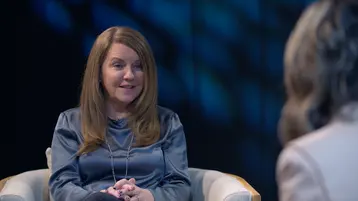
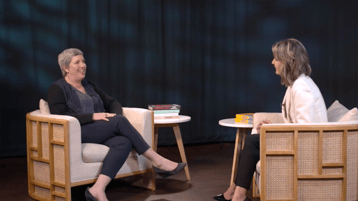
Jill Dellanno: Welcome, everybody. This afternoon, I'm pleased to introduce Dr. Domonique Revere, Dr. Dom, the global head of HR at the world-renowned architecture firm Adjaye Associates and founding principal at HR Remedy Consulting. Dr. Dom, as many people refer to her, is an award-winning HR leader, educator, coach and consultant.

Her work is centered around creating equitable spaces and creating scalable strategies to achieve psychological safety for all employees. She is a DEIB leader and development expert and has helped countless businesses grow and perform and personally and professionally and develop as they seek to transform their organizations.

Dominique, thank you so much for joining us today. I'm really excited for today's conversation. We're going to be really talking about upskilling and the importance that upskilling has on the modern workplace. So, Dominique, to get started, how do you really think about the concept and define the idea of upskilling and its significance?

Domonique Revere: Yeah, so, well, thank you, first and foremost, and thank you all for joining us. So, first and foremost, I would say that with upskilling, it's really about, first off, first and foremost, meeting people where they are, so taking your skills that you have today and really—how are we elevating them for the transforming organization and really the world around us?

When we think about upskilling, I think upskilling, a lot of times, we think about soft skills, so do we critically think, can we problem solve? But these are really vital skills, so these are transferable skills no matter what industry you're working in, and certainly no matter what role you're working in. So when we're talking about upskilling, it's really, again, about meeting people where they are and how are we elevating those skills. And then when I think about upskilling, and again from a DEI perspective, it's about bridging the gap, right. So that knowledge gap, the knowledge, the expertise gap and then even the access gap.

Because no longer are we really chasing those candidates that have the master's degree. People aren't taking those four and six years to get out of school. When we look at the statistics, black and brown people carry at least 57%, I'm sorry, $57,000 worth of debt coming out of undergrad. No longer are those days. So with AI and technology, and really the skills and technology that we have at our fingertips, this is an opportunity for us to not only accelerate that, but really to again, bridge that gap.

Jill:
Absolutely. And when you think about not just the skills, what roles are you seeing in industries that are experiencing the highest degree of change or pace of change where we need upskilling and need to focus on that?

Domonique: Yeah, I'd say every role, every role, but especially in roles where you are interfacing with people. So, roles that are catering to a client, whether it be external or internal, how are we, again, making certain that we're connecting with those individuals? This is where we talk about cultural competency. This is where we talk about being able to speak the language of the business. This is also where we're talking about—it's not just about the tactical skills, but how are we connecting and building relationships? So I really see it across all industries, but really in any role that you are interfacing with people.

So whether it's the customer off the street or whether it's the employee who, it's just their first day in the organization, we want to make sure that we're connecting with them, meeting them where they are. And those skills that are required to do that is involved in upskilling. How are we communicating? Again, how are we problem solving? How are we asking questions of the individual? And how are we really being mindful? But the one thing that I do want to make sure that we're being thoughtful about is—how are we being empathetic? Again, when we talk about meeting people where they are, not every day is a great day, not everybody is going to get it. But we need to make sure that we're asking the right questions and doing so intentionally.

Jill: Yeah, of course. Now, when you think about what steps an organization can take to really identify what those skill gaps are, what are your thoughts on how you can really get to the bottom of what skills need attention in your organization?

Domonique: Yeah, so I think part of it is doing the research. We've got so many tools at our fingertips. So, Jill and Jeff just talked about AI, being able to leverage AI. So that's one. The other thing is, I would say, ask people, and not only ask the employees, "what do you want to learn," but ask your clients, "what do you want to see?" What are the gaps in the last time that you had that interaction with our organization? What are some of the things that they're seeing and what are some of the expectations that they have? So part of it, again, is asking the questions and really being thoughtful from a leadership perspective and how do we pull it all together? And that doesn't mean that the leadership team has to do the heavy lifting. It does mean that this is a communal effort. So sometimes it's bringing everybody together.

When we talk about representation, who are the people at the table that are making the decisions? Whose voices do we hear in the room when we are now going out and implementing policies, practices, procedures and programs? All of those things matter. So when we are looking at where are the gaps, we have to go to the people that are going to be impacted. And does it make sense that we're creating programs that nobody's going to engage? Absolutely not. So, we want to make sure that we're giving people, yes, what they need, but also what they're going to engage with and where they're going to learn and feel like they're getting the most bang for their buck.

Jill: Yeah, absolutely. And when you think about what's in it for the employee in that conversation, not only understanding how they, as individuals, can grow and learn, how we can apply different ways of skilling to different populations, different roles, again, meeting them where they are. What are your thoughts on how you can build new outcomes into the design of an initiative? What are you looking to get out of upskilling these individuals? Obviously, there's a lot from a professional development perspective at the individual level, but how do you think about that from the organizational level as well?

Domonique: Yeah, what I'm looking at it from an organizational level and many of you and many people tuning in are familiar with the concept of an engagement survey. So, in that engagement survey, we're asking, "What do you want? What do you desire? Why do you continue to come to work? What makes you feel engaged?" So, that's one piece. That's one piece of the puzzle and that's one data point, where we are able to kind of lean in. But I think the other piece of that, when we're talking about the outcome is—it's not always going to translate into this monetary gain right off the bat.

It may translate into your retention number. So, while you only retained 70% of your population last year… Oh, hold on. Alright. Get into it. While you only retained 70% of your population last year, maybe this year the goal is 72%. And when you then run that engagement survey and you're asking folks, "Hey, why are you engaged? Why are you continuing to lean into these initiatives?"

It could be, "Hey, because you brought on an ERG group or an employee resource group. Hey, because you did an analysis of compensation across the board and you were able to level set where everybody's base salary was." It's really about the intentionality of it. And it's really about continuing to lean in, ask the questions, but also do something with the data. Do something with that information. It's not enough to just like analysis paralysis, continue to have all of these surveys, and then our employees start to think, "What? Oh, you're full of it."

Like, where's the credibility? Where is the outcome? Why are you sending me this survey again, if we're not going to do anything with the data? So again, a lot of it isn't, "Hey, well, I'm gonna see it in my bank account right away," but I may see it in my experience. I may see it in the retention. I may see it in the engagement. I may see it in my attendance numbers, where people are continuing to come to work instead of, "Hey, you know, it was a long weekend and now, you know, it gets a little crazy."

Jill: Yeah, I think that's great. I think you also hit on something, just in terms of like expectation management. When you're thinking about the length of time that it actually takes to upskill a population, whether it's an initiative or it's part of a shift in your day to day experience and the tools you're using on the job. Developing proficiency at something new takes a ton of practice. It's like anything else. And so I think one of the important things to think about is—what is your time conjecture? Are you talking about something that you're expecting to see proficiency in six months, in 12 months, in 18 months? And what are you doing to be creative about shifting that learning environment?

So there's an opportunity to practice multiple skills at a time without even feeling like you're in a training course or something like that. When you think about generally, tackling problems from the perspective of an individual contributor versus a manager, when the skill expectation is—you're trying to focus on the same thing, call it, maybe everybody's trying to work on influencing with authority, without authority, or something like that. What has been your approach with regard to upskilling the colleagues first or the managers first, trying to tackle things at the same time? What advice would you have for our folks in the room?

Domonique: Yeah, the first thing I want to talk about is managing the expectation. How I learn and how somebody else in this room learns is going to be totally different. So it may take me two minutes. It may take you two weeks. It may take somebody else two months. But therein lies the point when we talk about having the increased communication. It's making sure that we understand the expectations and we are not only understanding them, but we are communicating them effectively early and often.

If I'm rolling out this program, this is the expectation. In six months, you are going to be efficient or proficient in this area. And here are the resources, tools, strategies and support that I'm going to throw at you to make sure that you can do that. Now, hey, I may use it all. Somebody else may say, "Hey, you know what, I just want to do this as a self-paced, guided type of learning activity and I'm good to go." So, I think that first and foremost, we have to be clear about the expectations from a timing perspective. And again, I go back to meeting people where they are. When we're talking about tackling it, I think that there's room for both.

There's an opportunity to first, empower the leadership team, because we want our leaders to have the lingo, the language, the support, but they also need to have the agency in order to hold people accountable and if I need to pull somebody off the floor because we need to have a crash course in something, I don't want somebody beating down my door saying, "Well, where is this person?" Right?

So we also have to give them and enable them to have the authority and agency to do that. So I think that there is an opportunity in that space. So let's train our leaders first and then they can help to support the efforts as we continue to get everybody else up to speed. I also think that there is an opportunity to train from the bottom up. There is something about in the middle where there's the sweet spot. And we've all heard kind of leading up. And then we've all heard this kind of concept of leading our subordinates. So, when we're talking about leading up. Culture is built at the top and at the bottom. These are my expectations coming into the workspace.

This from a culture perspective. Mission values how I want our employees to make sure that we're going out into the world and being the face of the organization. In the middle is where the sweet spot is. So how do we again, meet each other where they are? I think also when we're talking about upskilling, there is no one stop shop or one single solution.

Really depends on the organization. How much time do we have? What do the resources look like? There's two types of currency, time and money. So are we spending time or do we have the money to do it? So that means, are we now putting this in a single repository where people can now self pace, guide, learn, where we're testing their understanding? There's participant workbooks, there's PowerPoint presentations where now you can lean into the initiative on your own. Are we doing roundtable discussions or in person workshops? And then also having a component where we're testing the learning, the understanding and having people lean into that.

Are there partnerships with the local colleges and universities? Maybe internally, I don't have the talent, or I don't have the time to really be able to now drive that initiative. So maybe I'm going out to local colleges, universities, nonprofit organizations and being able to leverage the resources and tools that they have.

I think the other thing and the other message that we send to our people when we do that is that there's a place for everybody, that it doesn't just stop here. When we're talking about home grown talent, when we're talking about talent within the organization, we can grow that in a magnitude of ways. And we can do that authentically while building relationships within and throughout the community internally and externally.

Jill: Yeah, I love that. And as you were talking, I was thinking about, you know, you mentioned when you don't have the talent, you go and you look for it elsewhere in terms of partnerships for upskilling. Really the key about upskilling is about being able to redeploy that talent. Giving them the tools to be able to lead the next generation of people that are coming in and being a valued employee within your organization. So can you talk a little bit about how you measure the success of some of these initiatives and how you look at redeployment of resources as they're developing skills, interacting in different ways, applying new tools and what that means really for their kind of adaptability in a changing environment?

Domonique: Yeah, no, that's a great question. So, I think the easy way to look at it is—how many people did we elevate over the last year? So when we posted that job on the job board and we looked at opportunities internally, how many people did we elevate throughout the organization? And not only that, how many people were successful in that role because we know that sometimes we put people in roles because they're really good at doing that thing. Then we're saying, "Hey, but now here's the keys to the bus and you can manage people that do that thing, too," and we know that doesn't work all the time. So part of it is that. How many times or how many people have we elevated and they've been successful in that role? So they're really thriving in that space.

The other piece of it is—how many people are coming to us and saying, "Hey, I've got an idea. Hey, I want to lean into that initiative. Hey, have you considered or thought about this? Hey, in the next executive meeting, can I get a seat at the table because I just want to pitch this to the team." So we also see it in the level of engagement in our employees. Because we know that when people lean into these initiatives and when they own these initiatives, what happens? They fly. If we know that it's a top down, and we're continuing to talk, and "This is important, this is important. We're going to hold you accountable and we're going to write you up. And we're going to blah blah blah."

People are like, "Huh, yeah, let me see you do it," but if my gal pal from two doors down is like, "Hey Dom, we're going to this lunch-and-learn, and Susie from Quality is putting this on. Come on, let's go." I'm going to be more apt to say, "Okay, hold on, let me just get this to a good spot and then I'll meet you there."

So part of it is also how many employees are driving these initiatives and the support that we're offering from a leadership perspective to say, "Yeah, here's the keys to the bus. Here's the resources. Here's the investment." And not only that, but leaders have to show up. Sometimes we tell employees, "You can do that thing. Let me know how it goes."

But what we have to do is we, too, have to show up with genuine curiosity to ask the question, and humility, to know that maybe we don't know all of the answers or maybe there's just a different way of thinking or doing or tackling that problem. And I think that when we start to have this idea of maybe we don't know it all, and maybe we can leverage the talent, the youth, the knowledge, the expertise in the room, and that we don't have to be that only vessel, that only voice, that's where we start to get that buy-in.

That's when we start to get the engagement. That's when we start to see that now trinkle down and trinkle over into retention, innovation. And, who doesn't want to make money? Productivity, profitability is where we see it.

Jill: Yeah, absolutely. And I think about also team engagement. So you're talking about creating that real learning culture on a team, who doesn't want to have the leader who says, "Speak up, somebody be a champion on this team. There's something new coming down the pike. I need someone to be an expert and help us all learn," and then be curious as the leaders.

Really dive in. Sit next to your team. Understand what it is, what's coming, how do they do it, why do they do it that way, why is this shift important for us, what outcomes are we going to get by adopting some of this in our daily routines? And I also think, really, when you invite that championship of whatever it is, the new skill, the new customer demand, the new technology, you give a different voice to all of the folks who are around your table. As the leader, you're listening, you're talking, but when there is an opportunity for someone to say, "Hey, I just went to that lunch-and-learn and let me share a little bit more," there's more confidence coming around the table. There's more debate. I think people are more willing to be inspired a little bit, too, if they know that they have the permission to go and seek a little bit more education as well.

Domonique: Absolutely. Yeah, and the other thing that I'll add is the representation piece matters. If I can see it, I can be it. So, if there's a woman in the room, if there's, you know, a person of color in the room, if there's an older person in the room that now is driving that initiative, I'm putting the pieces together to say, "Oh my gosh, well, if they did it, so can I." So now, when we're leaving the room, I'm more apt to pull that person to the side to say, "Hey, let's have that conversation. Hey, in that room, you said this and I was really intrigued. Can we talk a little bit more about that over coffee? Let's do a zoom meeting," whatever that may look like, because now, you've created this sense of safety. You've created this sense of comfort where you've broken down these walls where before "Hey, I've got this brilliant idea that I'm never gonna share because I just don't feel safe in the space."

Jill: Yeah, I think that's a critical part. Shifting gears a little bit on you, how does technology play a role in kind of advancing the experience of upskilling, either in identifying a gap or accelerating the learning?

Domonique: Yeah, I mean, I think it accelerates things. It really makes us or puts us in a position where we've got to think quicker. We've got to be more agile. We certainly need to be more nimble, but we have to use it as a tool. And I think that where we lose sight of things is that we want to leverage technology in a way where it replaces the human interaction and the human connection. So I think when we're talking about technology, there's an opportunity to marry technology and this human element, where we are using it for quick finds and answers, but we still need that human component to sift out what's factual, what's not. And then we still need that human component to really kick it over the finish line. So, it's important. It's not going anywhere. It's certainly accelerating how we do business, but it's only to really enhance the experience it can't take the place of.

Jill: Yeah, no, I fully agree with you. And I think where we can really lean in is when it provides us directionally with some feedback in real time. If you are looking for ways to connect with other people, you use AI that LinkedIn connects you with people who have different skills than you. There's AI, there's algorithms behind that. And we're starting to see opportunities where technology might be able to look at the way you're doing your work and provide you real time fee dback. Say, "Hey, as an AI, I just listened in on your call, you forgot to mention XYZ." Here's some real time feedback on how to incorporate that in real time into your conversation next time. That's getting a little bit too far down the path, but it does provide an opportunity to identify gaps that, if you can't be listening in on every call, if you can't be part of every conversation, you can be open to feedback that's coming from an AI perspective.

Domonique: Yeah, no, definitely. And I mean, it helps with those aha moments, like, "Didn't think of that,” or “Hey, you know what?"

Jill: It's unemotional.

Domonique: Yeah.

Jill: Right.

Domonique: Absolutely. Right. It is unemotional. But the thing that I will say that with AI, and someone else brought it up, is that we do have to just be mindful that while the system or while the tool is supposed to be non-biased, unbiased, there are biases, when we talk about AI, when we talk about where the testing has happened and who was considered and where the data comes from. We do want to just make sure that we're being mindful of that. And again, I think that it helps us with the data set. We know that data, if it's not in black and white, it didn't happen in some cases. But we have to again marry that with the human experience to ensure that we understand the whole story and that we're looking at things from a holistic perspective.

Jill: Absolutely. And I think when you're thinking about measuring the performance of somebody who is practicing new skills, I think you were talking earlier about the importance of really understanding how you're going to look at that performance over time.

How do you think about building in those performance outcomes when you're setting up the initiative? Something that actually baselines everybody, so that it doesn't matter what you had access to before. We're starting from a point in time going forward and we're building in that expectation of, "this is the skill, this is what we want this to look like, this is the outcome we're looking for over time." I think it's a really important part of getting rid of that bias. Do you have any thoughts on that and how an organization can kind of hook in to something like that?

Domonique: Yeah. I think, you know, we've seen it across many organizations where you have the personality assessment or the skill assessment to really kind of gauge where people are, almost like a proficiency test. But to really gauge where folks are, I think that there's a benefit. Again, I am a human connection person. So all things considered, and this is why we know that a lot of universities went away from testing; testing optional. Not everybody tests well. You get me under fire, it's gonna be a totally different thing. But we have a conversation, hey, you're going to have a totally different outcome. So, I think that we have to use it, but we have to use it sparingly. And when we're talking about baselining what somebody's skill sets are and where everyone is starting, we have to make sure that we're using actuals.

And if someone isn't there, again, we're taking the time, we're being intentional, we're doing the due diligence. We're giving them the tools, the resources that they need in order to get to that starting spot. And the other thing that I want to caution us is that it's like, "Oh my gosh, Dr. Dom, like we're talking about a lot of resources for a limited number of people. It is that we need to give attention to the problem right now or the opportunity right now."

And just because I may not be a part of that subset of information or that subset of people, doesn't mean that I don't matter too. Because I think, like, when we're talking about upskilling and when we're talking about, you know, bridging the gap and we're talking about this knowledge gap and, again it's a wealth gap that we also close with upskilling, we generally are talking about black and brown people. We're talking about marginalized communities generally that do not have access to the tools, the resources, the mentoring, the financial backing to a lot of these programs. So, all things considered, it is about opening up our worlds and really allowing us to be these out loud allies and advocates for other people, even when we may not benefit in the immediate, because in the long term, we all benefit.

Jill: Yeah, when you're talking about engaging with the populations that really are uniquely fighting the challenge to upskill, what are some of the creative ways or things we need to understand to take into consideration for different learning styles?

Domonique: Yeah, I mean, listen, neurodiversity. Like, we know we have to make sure that we are at the forefront making sure that we are being mindful of health and wellness. Like, where are you from just a personal health perspective? Gamification works. We know that when we make it fun, then people retain information differently. But again, for me, it's about asking the individual, "What do you need? How can I help you? Is it in a book? Or is it a PowerPoint? Or is it a roundtable discussion? Is it a question?" Like, starting off with a conversation card to kind of break the ice. I think that there's a lot of different creative ways that we can meet people on their journey. It's about engaging and asking the individual what he or she needs or they need in order to do so in a way that's meaningful to them. Not to us. Not what's easy. It may not be the first thing that we think of, but it's about being intentional when we're creating that space of comfort of safety for the individual.

Jill: Yeah, and when you go back to kind of creating that psychologically safe space as well, you know, as the leaders in an organization, your tendency might be to think, "Well, this is the way we're going to go about getting this done. This is the way we're going to go about getting this knowledge out there or expecting people to take it in, expecting people to demonstrate it."

I think creating the safety and accepting the fact that you may actually not know the best way for that information to be internalized is a critical part of being a vulnerable leader. And also offering up, you know, the opportunity for someone to say, "Ryan, is this going to work for you?" And for you to look right back and say, "Actually, I don't succeed in that kind of environment. I need X or Y in order to really help me internalize this. I need a chance to practice it. I like role playing. I like to type all my things out." Whatever the case may be, you want to ensure that your employees understand they can have a dialogue with you about how they are going to demonstrate to you that skill that they've just internalized.

Domonique: And also, understanding that Ryan may tell you, "Yeah, I got it." And he may not have it. And now he's telling Dan, like, "I don't know what she's talking about." And then Dan's like, "Okay, well Jill, this is what it really is," and not being offended by that, because I think that sometimes there's the offense, like, "But I asked him and he told me that everything was good."

But, he wants to make sure, and I'm not saying that you do, but he may want to make sure, anybody may want to make sure that, like, "I don't want to let this leader down. Like, I want her or him to think that I've got it together because, hey, it's almost annual review time and I want to be on, like, I want my name to be considered for whatever that next role is."

And I don't know about you all, but before AI, I was Googling the heck out of things like, well, I knew everything. Hold on. Let me Google. Like, where are we? So all of that to say, when we open up those lines of communication and that vulnerability and we really create these opportunities for people to lean in and trust us as leaders. That's when we're in that sweet spot. That's when we're starting to have that authentic conversation. That's when we're talking about when we as leaders have now opened the door and we're allowed, and I say allowed, because like I really feel passionate about like allowing people to show or share who they are fully.

There isn't this, "Well, this is who I am in my personal life and this is who I am in my professional life, and the two stay very separate," but when I can come to work and bring my whole self to work. Whoo! Listen, we're cooking with hot grease then. Absolutely. Yes.

Jill: And that requires a degree of upskilling itself. It's not comfortable. There are many of us who may feel, "I need that separation." So upskilling on what does it mean to bring your whole self to work, get comfortable with it, encourage other people to do it, and just accept that as part of who and how you do what you do every day is also a pretty big challenge.

So, you know, give yourself some grace in getting there, but really strive for it. Cause it's exhausting to be something else. So I see that we're at zero time, which I think means we can head into questions and from the audience. No? We can keep going? Alright. No time. No time. Okay, no time for questions.

Well, Dr. Dom, thank you so much. And I appreciate all of you listening.

Get the latest HR trends, insights, advice and more sent straight to your inbox.