Building a Scalable Workforce

Episode 5
 | 
Published: July 10, 2023
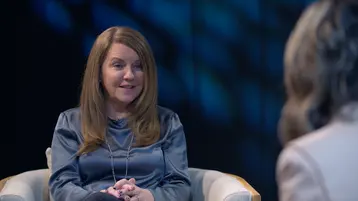
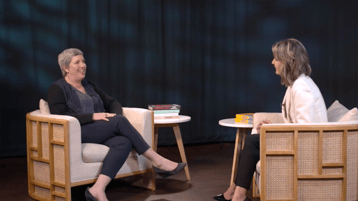
At TriNet’s PeopleForceX event in Boston, TriNet Divisional VP of Product Management, Jessica Cote, sat down with Joe Hastry, co-founder and CFO/COO of florrent. The two discuss building a scalable workforce, the challenges faced by startups, fostering an inclusive culture and taking advantage of R&D tax credits.

Announcer: Thank you everybody for attending TriNet PeopleForceX live here in Boston. TriNet PeopleForceX brings together local thought leaders to discuss topics relevant to SMBs today while creating community with an incredible unforgettable experience. I would now like to introduce our host, Jessica Cote, TriNet's Divisional VP of Product Management.

Jessica Cote: Thank you. Welcome everyone to TriNet PeopleForce X Boston. Very excited to be considered a thought leader. So I'm super excited to be here. Fireside chat with one of our TriNet clients and we're going to talk about building a scalable workforce. So first, I'd like to introduce you all to Joe Hastry, co-founder and CFO/COO of florrent. You have a really interesting company. Do you think you could tell us a little bit about it and about yourself?

Joe Hastry: Yeah, I would love to. So first, thank you TriNet PeopleForce for inviting me here tonight. So great to be here with all of you. As I mentioned, Joe Hastry, co-founder, CFO, COO of florrent. What we do is make bio-based energy storage devices called ultra capacitors. Ultra capacitors are like the inverse of batteries. Like, say, batteries are like marathon runners. Ultra capacitors like sprinters. Good at that high power quick charge discharge. And what's novel about our devices is that we make them out of raw, generously grown hemp that we sourced from our network of bipoc farmers to create basically a product that performs better, cost less. And that's that's a real quick and dirty value prop for you.

Jessica: So ultra capacitors, give me a little Back to the Future vibes.

Joe: Yeah, not the flux capacitor. Not to be confused with that, but yeah.

Jessica: So tell us a little bit about how you got into the business. Where did the passion come from and what made you think this is a great business to get into?

Joe: Yeah, I mean, if if you asked me five years ago if I'd be founding and running an energy storage company, I don't know if I believe you or say that I would be. You know, I'm a non-technical founder. I come from a CPA background. But my co-founder and CEO, José, and I grew up in the South Shore together.

José comes from an Afro Indigenous family and sometimes growing up faced times of energy scarcity, you know, no, no heat for hot showers, no wifi, lights getting turned off. And as we grew older, kind of realized that that's just a small fraction of what millions of people are living through every day and started to think, you know, how can we how can we fix this? How can we make this better for people?

And that's what motivated him to go study electrical engineering at UMass Amherst. What motivated me to go into the business school and kind of our plan was, you know, basically told him, “Go, go figure out a cool idea to do this and I'll go get as much experience as I can. So that when you do, we're ready to turn this into a business.” And that's what we've been doing. We're still super early. We've got a long way to go, but it's been a fun ride so far.

Jessica: So I was I was excited about the Back to the Future thing, hearing this, this is actually really cool. So tonight our topic is really about building a scalable workforce. So think about the different topics we have going on right now. Right? We've got recession, we've got wars in Europe. We've got limited parts, right? For different companies to be able to work with. So when we think about a scalable workforce, we've got to really think about how can we flex? How can we grow and shrink our workforce so that we can, you know, really adapt to that environment but make sure we still have high quality? Make sure we're still being innovative, we're still doing things that, you know, we're passionate about and that our customers are passionate about.

So as a startup, what unique challenges did you face in building a scalable workforce and how did you navigate those challenges even just beginning your business?

Joe: Yeah, I think, you know, as as I mentioned, we're a young startup. We just closed a $2 million pre-seed fundraising round and so we're using those funds to more than… Thank you, thank you. It's a crazy market out there right now, but basically using those funds to go from a team of four to a team of eight plus two interns. So more than doubling over the span of a couple of months, we just started our offsite production facilities out in Western Mass this month as well, to ramp up production and to run all those machines in that equipment. We need a top-notch workforce to do that. And so hiring over the past few months, we face two main challenges.

One, big focus of ours, a real key value of our company, is diversity, from our hemp supplier networks to our team all the way up to our cap table and pretty quickly realized, you know, posting on the big job boards and kind of the mainstream methods to source talent, that kept giving us the same kind of candidate that wasn't the candidates we were looking for.

You know, we think diversity of thought of color, of gender. It's really important to have those voices at the table as we're making decisions and technologies to, you know, potentially and hopefully shape the future of tomorrow. And so that, you know, we quickly realized it's going to be a bit of a challenge looking to hire these highly technical STEM background positions, like a senior material scientist, senior process engineer, R&D engineer, things like that.

The second challenge was geography. Like I mentioned, our R&D headquarters in Western Mass, our corporate headquarters is Greektown Labs in Somerville. And we realized, you know, people that don't… either went to UMass Amherst go M.A. men or women that are that are in the room tonight. But, you know, people that didn't go there or don't know the area think all they hear is two hours from Boston and that quickly turns people off that are coming from out of state, coming from different parts of the world even. And so that was that was another challenge that we realized very quickly this is going to take a little longer than we originally thought to fill these roles.

Jessica: I think you have a really unique opportunity, right, being on the campus for UMass in Amherst. So how do you attract and retain that top talent when you're competing with these larger organizations that have, you know, more brand recognition? They have that that name recognition out there for these students that might be graduating or new folks that are coming in. So what are some of the creative ways that you've used to attract that workforce or maybe even leveraging interns?

Joe: Yeah, I think the communities were a part of have been been really instrumental in helping us get the word out to the right people and to the right candidates. I think UMass has been, you know, key in building that intern pipeline for us like you alluded to. But I think what really made the difference was as anyone that's kind of a startup would tell you. We just kind of had to get scrappy. We had to get kind of grassroots about it. We had to tap into our networks. Fortunate to have a lot of great communities are a part of a lot of great supporters. And just making sure that that the job postings were getting out onto the right job boards into the hands of the right people, like I said, not posting on the kind of mainstream methods that kept giving us the mainstream results. And fortunately, our networks really showed up for us and brought us that time we needed.

Jessica: And and your company is definitely not mainstream. Like we don't… it's not something we hear about every day. So you mentioned diversity, right? And fostering diversity and inclusion in the workforce. What are some of the unique approaches, some of the creative solutions that as a startup you've implemented to really build that diverse, inclusive workforce with limited resources?

Joe: Yeah. I mean, I think a couple different things there. I think the first is just being really, really intentional and setting real clear criteria upfront and making that front and center. You know, our values and our mission from the first application step all the way to the last interview and making sure that that's a real hard screen for us.

Like if these values resonate with you, we have a place for you. If they don't, then I'm sorry, but another time or the place. And so being real intentional was an approach that we had to really, you know, take 110% to the core. And then also, like I mentioned, some of the support systems that are around us. We're really lucky and fortunate to be a part of the Excel cohort. We're the first cohort through the Excel program, which is a collaboration between Greentown Labs and in the green space. And they they were really key in making sure our job postings were getting out on those job boards that that were getting us the right candidates. And so, again, it was all about being intentional upfront and then also having a great support system around us to bring it to life.

Jessica: That's awesome. So it's one thing to find the right talent and right, but to engage them and to grow that talent is something else, right? Because you want to make sure that they're keeping up with technology and especially in your space, technology is probably constantly changing. So what are you doing to help your workforce with the necessary skills to be able to adapt as that technology and demands change?

Joe: Yeah. To be honest, that's something we're still really focused on, some something we're trying to work through. You know, first it was get the talent. Now let's keep the talent and upskill the talent. So that's kind of the next steps as we're going through that. But something we've really leaned on is, you know, we've been a team of four on paper, but there's really dozens of people behind us advisors, mentors, coaches, things like that that have been supporting us and that those are who we've really leaned on to bridge that gap so that our new joiners, when they get on, they're comfortable, they're feeling confident, they have the skills that they need to hit the ground running because we need these hires to to get integrated right away and start bringing our technology to the world.

Jessica: All right. So one area that that might be tough, right? Remote work. Remote work is super popular now. Everybody wants it, all of us. During COVID, we worked from home for a long time. And now, you know, certain organizations are trying to be back in the office. It's the push-pull. And especially in your industry, right? That is really an in-person industry, I believe.

Joe: Right.

Jessica: So what have you done to overcome the challenges there when you know there's such a strong desire for workers to be remote?

Joe: Yeah. Remote work is a funny one for us because technically we’re a COVID baby. Our company, we first formed in February of 2020. And if everyone remembers or represses the memory, the world kind of changed in March of 2020. And you know, before that I had never, we never really use Zoom, Google Meet, Teams, all that good stuff, which now in 2023 sounds insane.

But my co-founder José was in the Pacific Northwest actually at the time. And so it was really remote work that enabled us to get this off the ground in those first couple of years. But now fast forward to our hiring process and like you said, you can't be… you can't really do work in the labs remotely. There isn't VR headsets that are that are capable of that yet, as far as I'm aware, maybe, maybe in a couple of years.

But yeah, it's something that you really to do this deep research, to do the tech technical work as manufacturing, you do have to be in the labs. And that's something that, like I said, was a bit of a blocker to people because even though it said it very clearly on the job description, you're in person 100% of the time. So many candidates that came through would say like, you know, I see it's out there, but I'm like, you know, in the 495 belt, can I do a couple days in Amherst and then a few days from home? And unfortunately, the answer was no. But that was another good screen for us to know who is really dedicated and who is down to get out in Western Mass and make this make this happen.

Jessica: Who knows? As you grow, you may have, you know, additional roles that could be remote, right?

Joe: Right. Exactly right.

Jessica: All right. So looking back, what advice would you give other startups? What advice would you give them in terms of building that scalable workforce, finding those employees, how to prioritize what they're looking for?

Joe: Yeah, I think the best advice I can give, is whatever you expect it to take, whatever duration of time or money you expect it to take, just double that in your budget and your timeline and everything like that. Same with same with your first fundraising round. Learn that a lot during this past year. We basically started that right at the beginning of the economic downturn, bookmarked it with the banking crisis. And so we had a nice to two bookends to that fundraising effort. But same with the workforce development side, the hiring side, you know, we saw it in the fall when we first really open this up. We'd have everything filled by the end of the year and here we are in May and we're just getting the full team assembled.

But ultimately, I think timing works out for the best. I think, you know, being a little more patient got us the right results in the right candidates, and we couldn't be more happier, more thrilled with the team that we have now. But yeah, my advice would just be whatever, whatever you're thinking for time and money, just double it because it's going to take it's going to take time to get it right.

Jessica: It's really, really good advice. So let's open it up to a couple of questions. Does anybody have any questions that you'd like to ask, maybe some advice or what's worked well that the Joe could answer. Any questions? Do you have any questions that you'd like to ask that, you know, Joe might be able to provide some advice or what's worked well for his company.

Audience member #1: What are the plans for the $2 million pre-seed round?

Joe: Great question. So, yeah, we're using those funds to, like I said, basically more than double the team. That's a big effort and that's going to be salaries are going to be our biggest spend for the next two years, opening that production facility in Western Mass. So basically moving our scale from benchtop out at UMass to now being able to go in from making grams of our material to kilograms and even tons in the next couple of years is the key there. And then buying a lot of really expensive R&D equipment. That's also going to be a big capex spend. But we got the money now already ready to use it. Thank you for the question.

Jessica: Next question.

Audience member #2: Great, great advice. Thank you. So quick question. You mentioned R&D a couple of times. So how are you taking advantage of the R&D tax credit? And if so, is it against the payroll or the income tax?

Joe: I am working with TriNet and Clarus to actually get that applied to our payroll currently. So you plan. But, yes, everything we do qualifies for it, which is which is huge for us. Everything in the IRA, the ITCs, the PTCs, everything we're doing qualifies under that as well. So that's all a lot of wind in our sails that's really been helping us.

And something we're excited to continue to take advantage of you. Thank you.

Jessica: Can I take one more?

Joe: Let's do one more. See what’s out there.

Jessica: Any other questions? Right up front. Hold on just a second.

Audience member #3: So you mentioned the employees that you have, but there's dozens of people working in the background—mentors, coaches. Who's your favorite partner or someone that's maybe, you don't have to name drop, but made the most impact in your growth so far.

Joe: Taking favorites. Oh, man. All right. I think. You know, I've mentioned and mentioned a few different names up here, but I think the communities that have really made the biggest impact for us, I can't I can't say enough. Thanks to two Greentown Labs out in Somerville. That's where that's where myself and our CEO work out of most days. That's our corporate headquarters. And an R&D out at UMass. Also got to continue to shout out UMass. We're also all alumni from there and they continue to give back to us in so many ways. State of Massachusetts has a 75% voucher for everything that we do out there too. So shout out the government, I guess to that doesn't hurt.

Jessica: All right. So I was I was actually taking that as like, who's your BFF? What is helping you? Could you not live without? All right. Well, I think we'll wrap. I'll give I'll give you Joe break, but thank you so much. This was super insightful. Really, really helpful.

And thank you all. Thank you all so much. Have a great night.

Get the latest HR trends, insights, advice and more sent straight to your inbox.