Recognizing Disability Pride Month
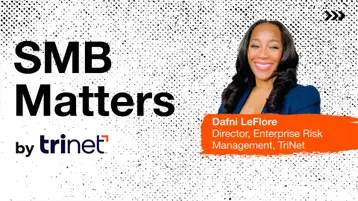
Welcome to SMB Matters, I’m Dafni LeFlore, Director Enterprise Risk Management at TriNet. This podcast series takes a close look at the latest news and trends on a variety of topics related to running a successful small or medium sized business.
Today, I’ll be talking about Disability Pride Month, which is celebrated worldwide every July to acknowledge the contributions of individuals with disabilities while ending the stigma and bias these individuals face.
Imagine standing at the steps of the U.S. Capitol Building on March 12, 1990, to witness one of the most harrowing acts to provoke the passing of the Americans with Disabilities Act (ADA). The Capitol Crawl, as the protest is known as was proof that more needed to be done as hundreds of physically disabled protesters climbed the steps to promote the enactment of this law. This is just one example of why Disability Pride Month is such a critical piece of how we promote equality and individuality, as is strongly echoed in this year’s theme, “We Want a Life Like Yours.”
Worldwide, approximately 1.3 billion people, or 1 in 6, currently live with a significant disability according to the World Health Organization. Approximately 44 million adults in the U.S. live with a disability and are non-institutionalized. Of this population, it is estimated that 1.8 million are disabled business owners.
Differently-abled workers are more likely to be empowered towards self-employment than those without disabilities due to some of the challenges driving their employment decisions. As of 2023:
- Differently-abled people are less likely to complete an undergraduate degree than those without a disability.
- Unemployment rates are 3.7% higher for workers with disabilities than those without.
- There is a large disparity between full-time employment by workers with disabilities and those without, with workers with disabilities being more than twice as likely to work part-time.
- The median earnings rate tends to be approximately 43% less for workers with disabilities than those without.
Self-employment doesn’t necessarily help differently-abled people avoid these statistics or different challenges, however. The most significant barriers they tend to face in their entrepreneurial journey include difficulty accessing capital and limited support and resources tailored to their unique needs.
While these statistics are eye-opening, small and medium-size businesses must bridge the gap between equity and inclusion for differently-abled people. Part of that starts with knowing what resources are available to owners and entrepreneurs. The other is to recognize disability as a natural aspect of diversity. Let’s take a closer look at some of the ways business leaders can do this.
For non-employer owner/operators**:**
- The Small Disadvantaged Business Program is offered to eligible businesses meeting the following criteria: 1) has at least one disadvantaged person with more than 51% ownership, 2) that disadvantaged person is socially and economically disadvantaged, with persons with an identifiable disability potentially qualifying as such, and 3) the business must be considered “small” in accordance with Small Business Administration standards.
- Along with this, the National Association for the Self-Employed (NASE) is a provider of grants for disabled self-employed and micro-business owners. Grants totaling $4,000 each are awarded for business expansion needs for NASE members.
- Device loan library programs, like the one developed by Access Technologies, Inc., allow business owners to borrow assisted technology at a reasonable cost.
- 2gether International lastly,seeks to advance business owners with disabilities by connecting them with a network of other differently-abled entrepreneurs as a means of building the pipeline of support for these owners.
For employers and employees**:**
- Consider initiatives for more accessible technology. With the amount of digital disruption, we’re all seeing more can be done to balance skillsets across employee demographics. The Partnership on Employment & Accessible Technology (PEAT) is a great resource to engage for support in leveraging emerging, more accessible technologies.
- Also consider hosting a fireside chat. It is important to understand topics like ableism, medical vs. social models of disability, and even the use of the word “disabled.” By inviting others to share their experience, the resulting psychological safety and allyship can make for stronger teams.
- Check the numbers. Understand where your hiring practices may be biased towards the hiring of different-abled people and create a strategy for becoming more diverse. The Job Accommodation Network (JAN) provides free advice on how to best advocate for employees and it’s a great way to understand what your data might be indicating about your employment practices as well. Also with this, connecting with the Employers Assistance and Resource Network on Disability Inclusion (EARN) would also be a way to better attract talent with disabilities.
- And lastly do business with disability-conscious businesses. The U.S. Disability Chamber of Commerce has a search tool where you can find local businesses owned by differently-abled people across several different industries. This advocacy places action and intentionality behind the beliefs of your organization.
At TriNet we are so inspired by the courage of the many differently-abled entrepreneurs who consistently showcase their resiliency, commitment and success in business.
Thank you for listening to SMB Matters. If you enjoyed this podcast, please leave a review on Apple Podcasts, Spotify, or wherever you listen to your podcasts. And please share it with your colleagues and be sure to subscribe to our newsletter at TriNet.com/Insights.
Also, we would love to hear from you, so please feel free to drop us a line at SMBMatters@TriNet.com. SMB Matters by TriNet is committed to providing small and medium-sized businesses with timely and relevant insights.
Legal Disclaimer:
This podcast is for educational purposes only. With decades of experience supporting small and medium-size businesses, TriNet has unique insight into HR best practices for businesses. TriNet does not provide legal, tax or accounting advice. The materials in this podcast and the options and opinions expressed herein may not apply to your company or scenario, so you should consult with your own advisors on how best to proceed. Reproduction in part or in whole is not permitted without express written authorization from TriNet.


